 Snorkel Coiba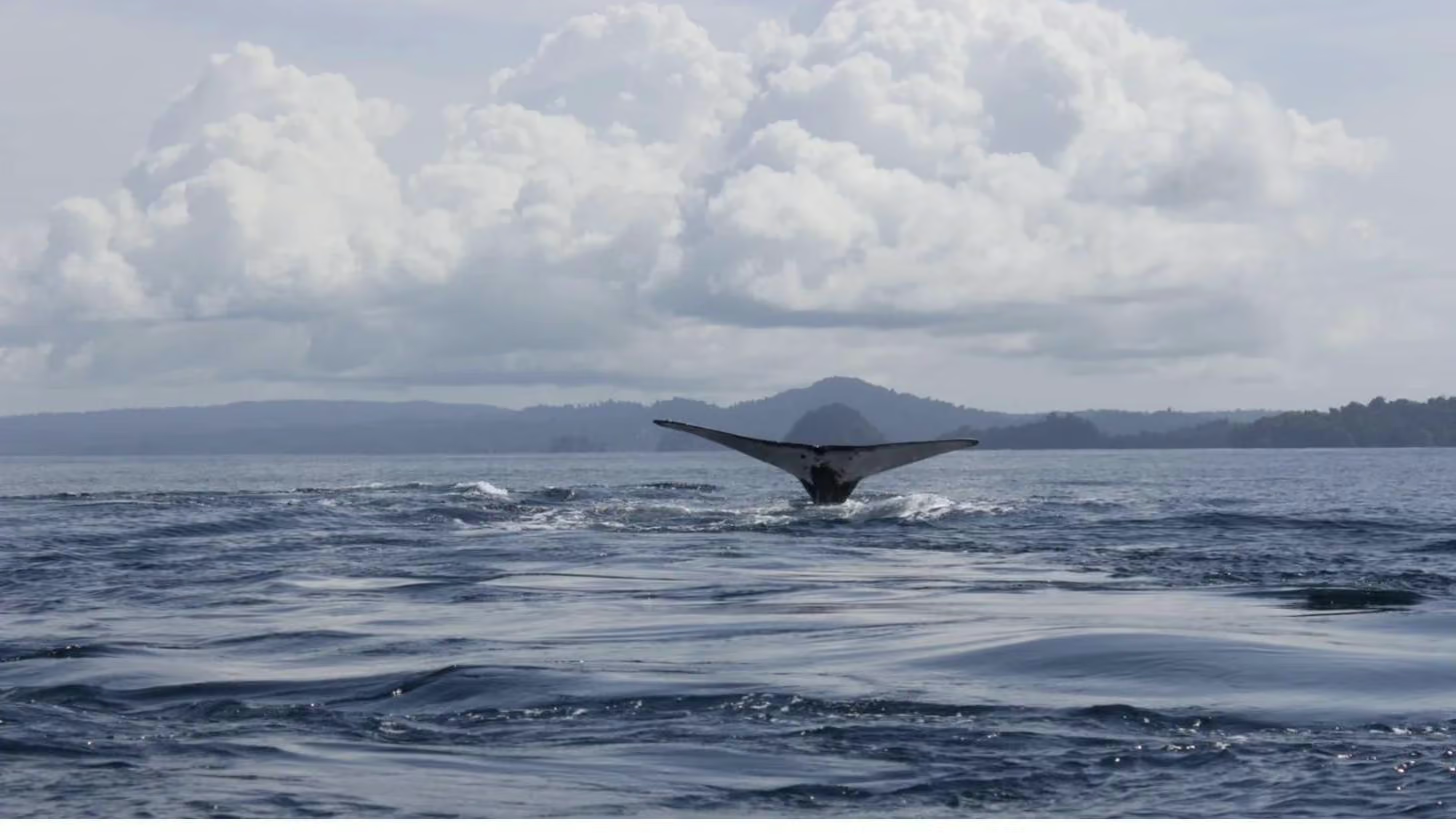
Few countries can claim what Panama can: it is one of only two places on Earth — the other is neighbouring Costa Rica — where humpback whales from both the northern and southern hemispheres migrate to the same warm waters. That quirk of geography turns Panama's Pacific coast into one of the world's great whale-watching stages, and the seas around Coiba National Park, right off our home town of Santa Catalina, are one of the best places to witness it.
Two hemispheres, two whale seasons
Most whale destinations get one migration a year. Panama gets two, because it sits almost on the equator, in the path of humpbacks travelling from opposite ends of the planet:
- Southern-hemisphere whales (July–October). This is the main event. Thousands of humpbacks travel up from the feeding grounds around Antarctica — a round trip of roughly 8,000 km, one of the longest migrations of any mammal — to breed and calve in Panama's warm bays. Sightings peak in August and September.
- Northern-hemisphere whales (roughly December–March). A smaller population arrives from the North Pacific — waters off California, Oregon and Washington. Numbers are lower, but it means Panama has whales in the water across two separate windows each year.
According to Panama's official tourism board, more than 30 species of cetaceans visit the country's coasts, and the humpback season stretches roughly from July to September at its peak. (source: Visit Panama)
Where whales pass in Panama
Humpbacks hug Panama's entire Pacific coast during the season, but a handful of spots are famous for reliable, close encounters. From west to east:
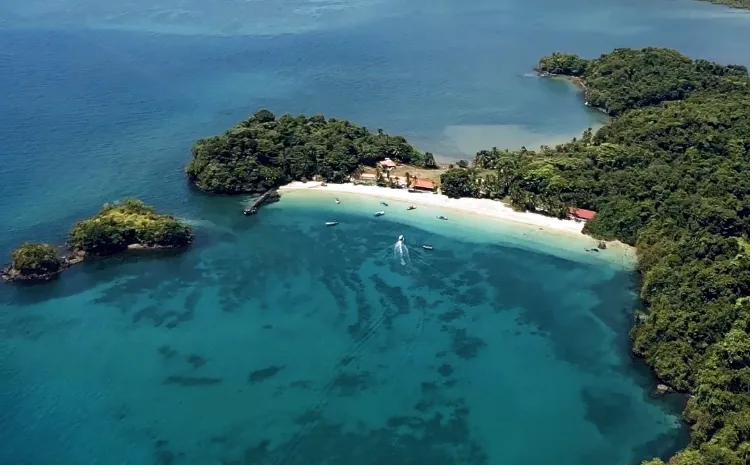
- Gulf of Chiriquí & Coiba National Park. The star region. This UNESCO-listed marine park is a protected nursery where mothers feel safe enough to bring calves close to boats. It's reached from Santa Catalina (our base), as well as Boca Chica and Islas Secas.
- Gulf of Montijo — Cebaco & Gobernadora islands. Calm, warm refuges right next to Santa Catalina that whales use to give birth and raise their young.
- The Azuero Peninsula. Pedasí, Playa Venao and the Isla Iguana Wildlife Refuge, where warm Pacific waters draw humpbacks close to shore.
- Las Perlas Archipelago & the Bay of Panama. The easiest option from Panama City — day trips run to the Pearl Islands and Contadora, with a chance of orcas too.
- Isla Taboga. Just off the Panama Canal entrance, ships waiting to transit sometimes spot whales; day trips from the city have a high success rate here.
- Farther afield. Whales are also seen off the Darién's Chocó coast, and pilot whales and some humpbacks appear on the Caribbean side around Bocas del Toro.
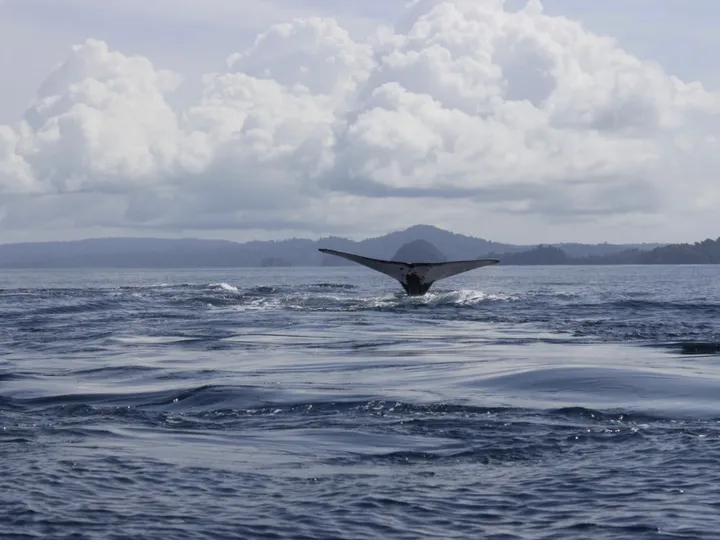
Why Coiba is one of the best places to see them
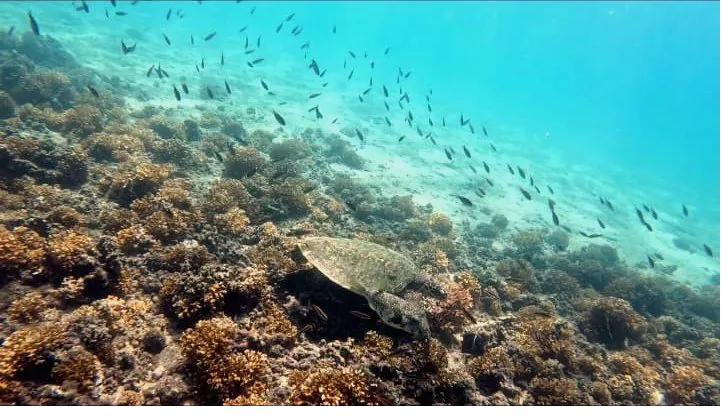
Plenty of coastlines have whales; Coiba has whales and almost no crowds. Because the park sits inside the Gulf of Chiriquí — the exact corridor where both migrations converge — and because its waters are strictly protected, humpbacks treat it as a safe nursery. Operators in the region report sighting success rates around 90%+ at the peak of the July–October season. Add reefs, turtles, dolphins and rainforest islands to the same day, and it's hard to beat. If whales are your priority, read our dedicated whale-watching guide and pick your dates with the seasonal calendar.
What you'll actually see
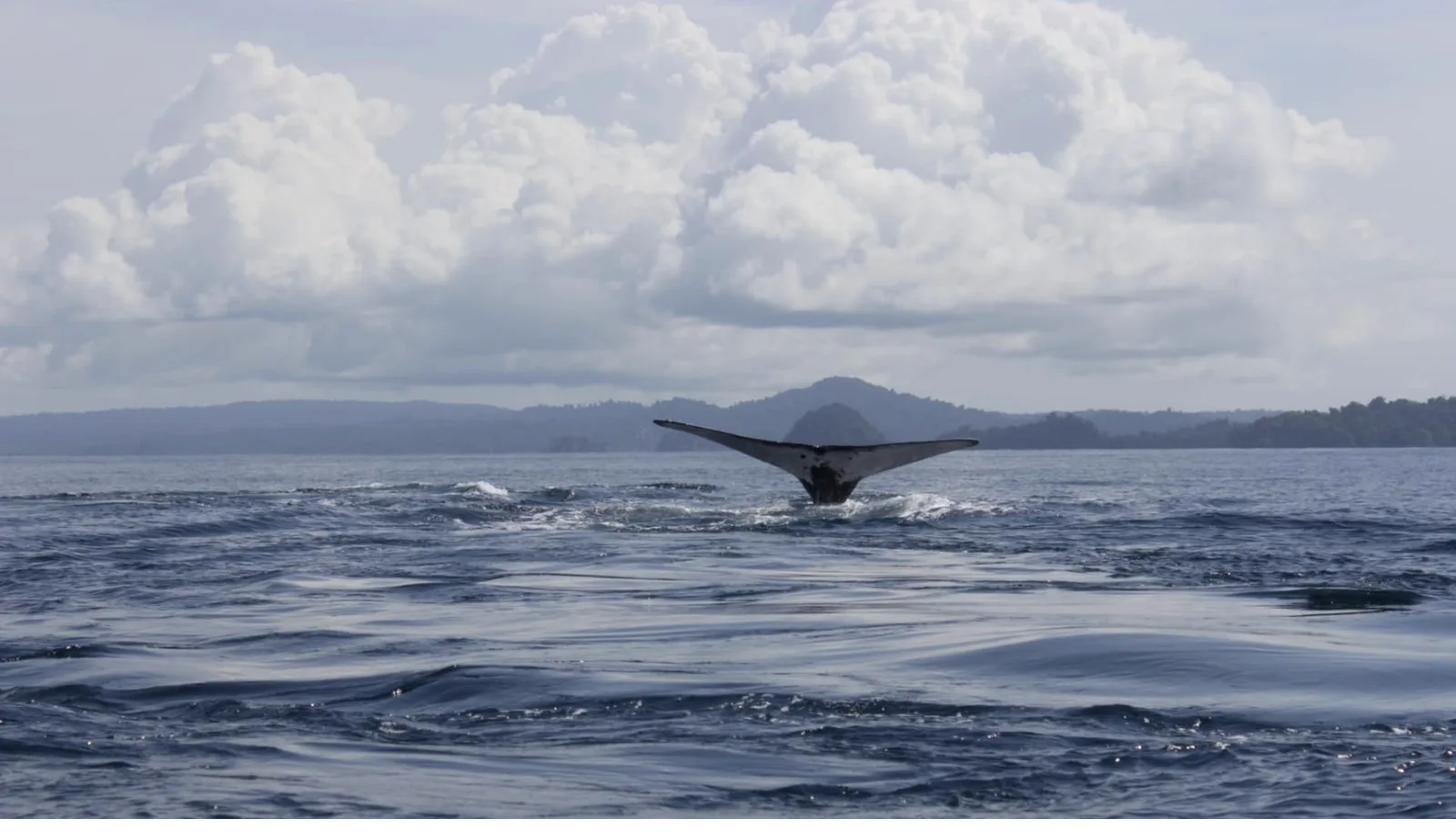
Humpbacks are the most acrobatic of the great whales, and a good day delivers a real show: breaching (launching almost the whole body out of the water), tail and pectoral-fin slaps, and spy-hops. The males are famous for their songs — complex sequences that can last 20 minutes and carry for kilometres underwater; on calm days you can sometimes hear them through the hull of the boat. Best of all is the season's real purpose: mothers escorting their newborn calves through the shallows. Beyond humpbacks, Panama's waters host Bryde's whales, false killer whales, pilot and sperm whales, the occasional orca, and several dolphin species that often ride the bow on the way out.
Watching whales responsibly
Panama's guidelines ask boats to stay at least 250 m from a whale with a calf, cut the engine if whales approach on their own, and never chase, surround or swim with them. Our captains follow these rules — it keeps the whales calm and, honestly, makes for better viewing.
Quick answers
When is the best time to see whales in Panama?
July to October, with August and September the sweet spot for the southern-hemisphere humpbacks. A smaller northern group appears around December–March. For the best odds, give yourself at least two days on the water.
Can I see whales on a Coiba snorkeling tour?
In season, very often — the crossing from Santa Catalina passes through prime whale water. Our dedicated whale-watching tour runs July–October and spends time actively looking for them, while still snorkeling the reefs.
Are whale sharks the same as whales?
No — whale sharks are fish, not mammals, and Coiba's best chances for them are January–March. Humpback whales are the migrating giants you'll see breaching at the surface. You can meet the whole cast in our marine life guide.
Panama's role as a meeting point for two whale populations is well documented by researchers who have monitored these waters for over two decades, and by the country's tourism authorities. It's a genuinely world-class wildlife event happening on Coiba's doorstep every year — and you're invited.
See the giants for yourself
Our seasonal whale-watching tour (July–October) combines humpback spotting with snorkeling in Coiba. Tell us your dates on WhatsApp and we'll let you know what the whales are doing.
See the whale tour Chat on WhatsApp