 Snorkel Coiba
There are few places on Earth where the worst of human history produced the best of nature. Coiba is one of them. The island travelers now cross the Pacific to snorkel was, for most of the 20th century, a name Panamanians lowered their voices to say.
Coiba sits about 24 kilometres off Panama's Pacific coast, in the province of Veraguas. At roughly 500 square kilometres it is the largest island in Central America — and for thousands of years, it was almost entirely cut off from the rest of the world. Coiba separated from the mainland around 12,000 years ago as sea levels rose, and its last known Indigenous inhabitants left in the mid-1500s. That isolation would define everything that came next.
An island built to keep people in
In November 1919, under the administration of President Belisario Porras, Coiba was converted into a penal colony. The logic was grim but simple: an island this remote was difficult to reach and almost impossible to escape. The waters around it are deep, current-swept and patrolled by sharks. Prisoners who tried to flee rarely made it.
At its peak, the colony held as many as 3,000 inmates, spread across some 30 camps scattered around the island. Rather than a single cell block, Coiba functioned as a forced-labour settlement. Prisoners farmed and ranched the land — at one point even growing bananas — under a long-term government plan to one day turn the island into a place ordinary Panamanians might settle. That plan never materialised; simply shipping produce back to the mainland proved too costly and complicated.
Panama's Devil's Island
For decades Coiba was compared to France's infamous Devil's Island. Until just over two decades ago, it was one of the largest operating island prison systems in the world.
"Los Desaparecidos"
Coiba's darkest chapter came during the back-to-back military regimes of Omar Torrijos and Manuel Noriega. The island became a place to send political enemies as much as criminals. Hundreds — by some accounts more — of political prisoners were brought here in secret and never returned. They are remembered as "Los Desaparecidos," the disappeared.
Stories of abuse, forced labour and politically motivated deaths from this era still cling to the ruins. When Noriega's dictatorship fell in 1989, the worst of it ended, but the prison kept operating — housing ordinary inmates — until it finally closed in 2004.
The fear of Coiba kept people away for almost a century. In doing so, it quietly protected what may be the most pristine marine wilderness left on the Pacific coast of the Americas.
The accidental sanctuary
Here is the paradox at the heart of Coiba's story. While the rest of Panama's coastline was fished, farmed and developed, Coiba sat untouched — too dangerous, too forbidden, too far. No resorts. No fishing fleets. No roads. For 85 years, nature had the island almost entirely to itself.
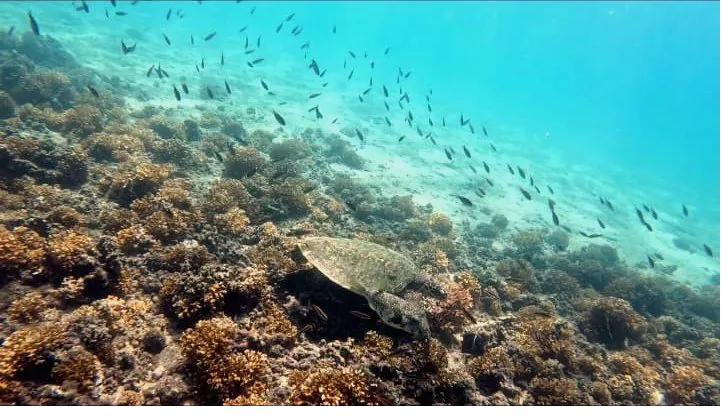
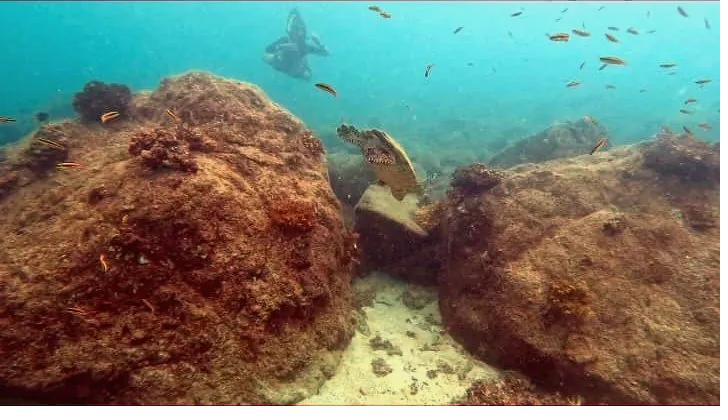
The result is staggering. Around 80% of Coiba's rainforest remains untouched — one of the largest undeveloped tropical forests anywhere in the Americas. Beneath the surface, its reefs flourished into one of the richest marine ecosystems on the planet.
From feared to protected
Just three years after military rule ended, Panama's government made a remarkable decision. In 1991 it declared Coiba and its surrounding 38 islands — along with the marine waters between them — a national park. In 2005, UNESCO named Coiba National Park a World Heritage Site, citing its evolutionary significance and its role as a refuge for at-risk species.
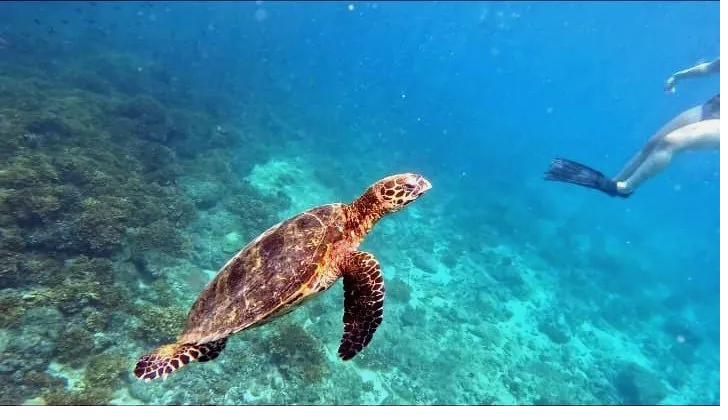
Scientists have since nicknamed Coiba the "Baby Galápagos." It's more than a marketing line: research has shown that Coiba and the Galápagos are linked through a natural "pipeline" deep in the Earth's mantle, and the island shelters endemic species found nowhere else, including the Coiba howler monkey. Today the park is home to 760 species of fish, 33 species of sharks, and more than 20 species of whales and dolphins, plus nesting sea turtles.
Still watched over
Coiba is now accessed by permit only. A small military outpost remains in the old prison administration buildings, keeping watch over visitors — and the waters — to this day.
Visiting Coiba today
What was once a place of confinement is now one of Panama's great open-air experiences. On a tour you can walk among the atmospheric ruins of the old penal colony — crumbling walls slowly being reclaimed by jungle — and then, minutes later, slip into water so clear and alive it feels like another planet.
It's a rare thing to stand somewhere and feel both histories at once: the weight of what happened here, and the wild, thriving present that grew out of it. That contrast is exactly what makes Coiba unforgettable.
A 2026 postscript. History added an unexpected chapter this year: in June 2026, Panama transferred a small group of high-security inmates to the naval station on Coiba, reopening a national debate about the island's protected status. The tourist areas of the park are unaffected, but the old penal-colony ruins are currently off-limits to visitors. We cover the verified facts in our dedicated article.
See the island for yourself
Walk the prison ruins and snorkel the reefs that its isolation preserved. Our local guides bring the whole story to life.
Book a Coiba tour Ask us anything