 Snorkel Coiba
Ask any traveling surfer about Panama's Pacific coast and one name keeps coming up: Santa Catalina. This sleepy fishing village hides one of Central America's most consistent and powerful waves — warm water, long rides and, remarkably, still almost no crowds. Whether you're chasing the famous point break or learning to stand up for the first time, here's everything you need to know about surfing in Santa Catalina.
Why Santa Catalina is a world-class surf spot
Santa Catalina faces open ocean, so it catches swell that marches in straight from the south Pacific with very little to block it. The result is a wave that breaks year-round, with serious size when the south swells fire. Add water warm enough for boardshorts, a long surf season and a fraction of the crowds you'd find in Costa Rica or Mexico, and you understand why those who make the journey tend to come back.
The main surf breaks
There are a handful of breaks within reach of the village:
See lessons & book →
- La Punta — the headline wave. A powerful right-hand point break over a rock-and-reef bottom that can hold real size and offers long, fast rides. It's tide-sensitive and best left to confident, experienced surfers.
- Playa El Estero — the beach break just south of town, with a sandy bottom and more forgiving waves. This is where beginners and improvers spend their time, and where the surf schools run lessons.
- Punta Brava and the outer reefs — less crowded, more exposed options for those with a boat or a guide and some experience.
When is the best time to surf?
There's rideable surf in Santa Catalina all year, but the biggest, most consistent swells arrive roughly February through August, when south-Pacific storms send long-period waves north. For the most comfortable conditions on land, the dry season (mid-December to April) brings sunny days and lighter winds. At La Punta, the tide matters — the wave works best on a mid-to-high incoming tide, so check a tide chart and ask locally. Our month-by-month best time to visit guide covers the seasons in detail.
A powerful point break, water you can surf in boardshorts, and a lineup that's never packed — Santa Catalina is the wave other surfers haven't found yet.
Beginner or experienced?
Both are well looked after. Beginners should head to Playa El Estero and book a lesson — the village has surf schools and instructors who'll have you riding whitewater on day one. Experienced surfers will make a beeline for La Punta, but respect the reef, the locals and the tide. Boards of every kind can be rented in town, so you don't need to travel with your own.
What to do on a flat day: snorkel Coiba
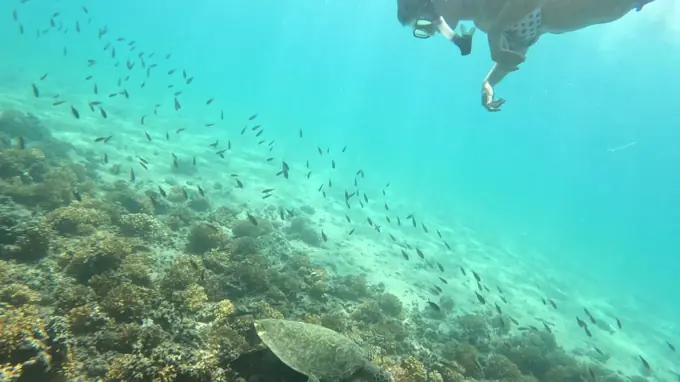
Here's the secret that makes Santa Catalina more than just a surf trip. When the swell drops and the ocean goes glassy, the very same village is the launch point for Coiba National Park — a UNESCO World Heritage marine reserve with 760+ fish species, sea turtles, reef sharks, rays and dolphins. A flat day isn't a wasted day here; it's the perfect excuse to swap the board for a mask and have one of the best snorkeling days of your life. A full-day tour with gear, guide and lunch starts at just $70.
Surf days on, snorkel days off
When the waves go flat, come out to Coiba with us — turtles, reef sharks, rays and a beach lunch, from $70 with gear and a local guide. See the Coiba Island tour.
Getting to Santa Catalina
Santa Catalina is on Panama's Pacific coast in the province of Veraguas, about a day's travel from the capital. The full breakdown is in our guide on how to get from Panama City to Santa Catalina, and there's more on the village itself in our Santa Catalina guide.
Make the most of your trip
Come for the wave, stay for everything else. Santa Catalina pairs world-class surf with world-class snorkeling in a village that still feels like a secret. Whether the ocean is firing or flat, there's always a reason to be in the water.
Surfed out? Come snorkel Coiba
One day, 3 snorkel stops on three islands, turtles, reef sharks, rays and lunch on the beach — from $70, booked directly with the local crew. No middlemen, ever.
Book your Coiba tourChat on WhatsApp