 Snorkel Coiba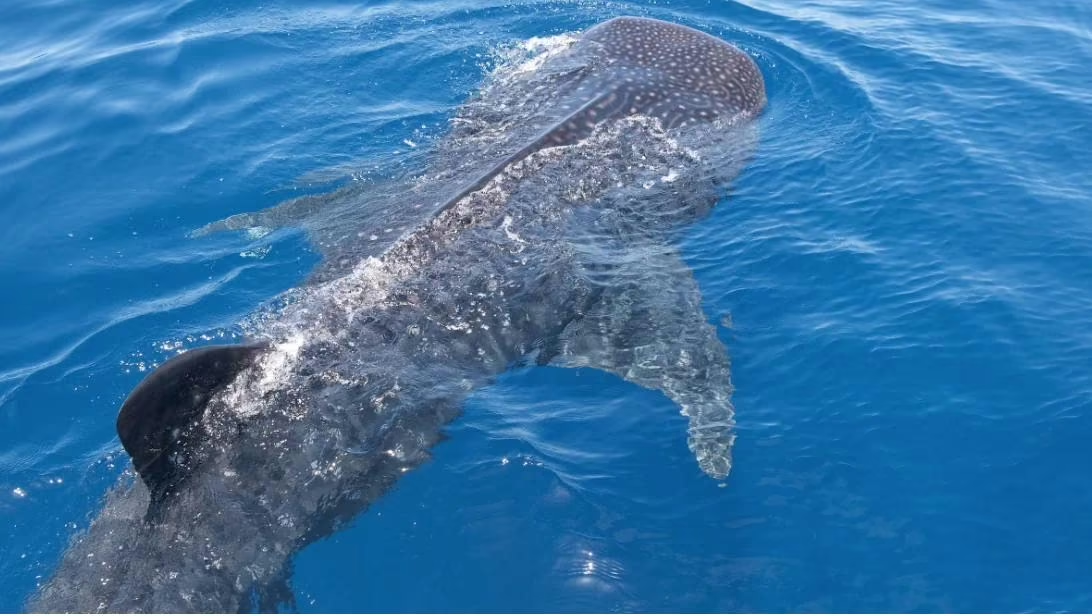
Imagine floating at the surface when a spotted shadow the size of a bus glides beneath you — mouth wide, utterly unbothered by your existence. That's a whale shark (Rhincodon typus), the largest fish on the planet, and Panama's Pacific waters around Coiba National Park are one of the places in the Americas where lucky snorkelers meet them.
Whale shark or whale? Neither bites
Despite the name, a whale shark is a shark, not a whale — a slow, filter-feeding fish that eats plankton, fish eggs and tiny crustaceans. It has thousands of tiny teeth it doesn't use for biting, and it poses no danger to people. Adults commonly reach 8–12 meters, and every individual carries a unique pattern of white spots, like a fingerprint. They are gentle, slow-moving and often curious — which is exactly what makes swimming beside one so unforgettable.
When is whale shark season in Panama?
Whale sharks follow the plankton. Around Coiba and the Gulf of Chiriquí, sightings cluster in the dry season, roughly December through April, with the strongest window from January to March. That's when nutrient-rich upwellings feed the plankton blooms these giants travel for. Sightings are possible in other months too — Coiba's food-rich waters keep surprises coming year-round — but if a whale shark is on your bucket list, aim for the start of the year.
Why Coiba is Panama's whale shark hotspot
Coiba sits in the Eastern Tropical Pacific corridor — the same protected marine highway that links Galápagos, Cocos and Malpelo, all legendary whale shark waters. The park's strict protection means abundant food and calm, boat-light seas, so the giants linger. The same conditions that make Coiba's snorkeling world-class — clear water, healthy reefs, 760+ fish species — are the reason whale sharks keep showing up here when they've grown scarce elsewhere.
What an encounter is like
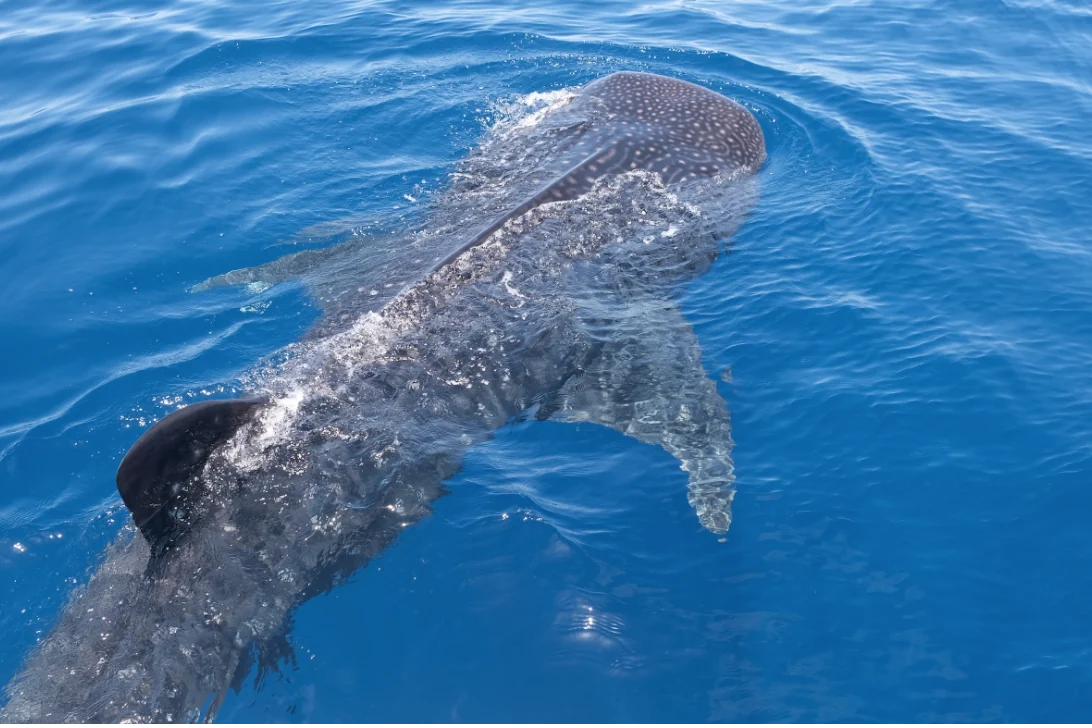
Most encounters start with a shout from the boat — a dark shape near the surface, dorsal fin cutting a slow line. You slip into the water a respectful distance away, put your face down, and there it is: impossibly big, impossibly calm, moving with barely a flick of its tail. Whale sharks often cruise just below the surface while feeding, which makes them a snorkeler's animal — no dive certification needed. Encounters can last from a single breathtaking minute to half an hour if the animal is feeding in the area.
How to swim with them responsibly
- Keep your distance: stay at least 3–4 meters from the body and farther from the tail.
- Never touch: their skin has a protective mucus layer, and touching stresses the animal.
- No flash, no chasing: let the shark set the pace; swim calmly alongside, never in front of its mouth.
- No sunscreen slicks: use reef-safe sunscreen, applied well before you enter the water.
- Follow your guide: park rules exist so these giants keep coming back.
Can you see them on a regular Coiba tour?
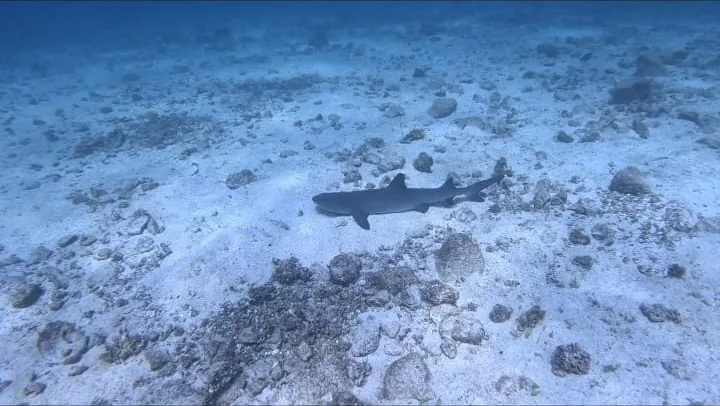
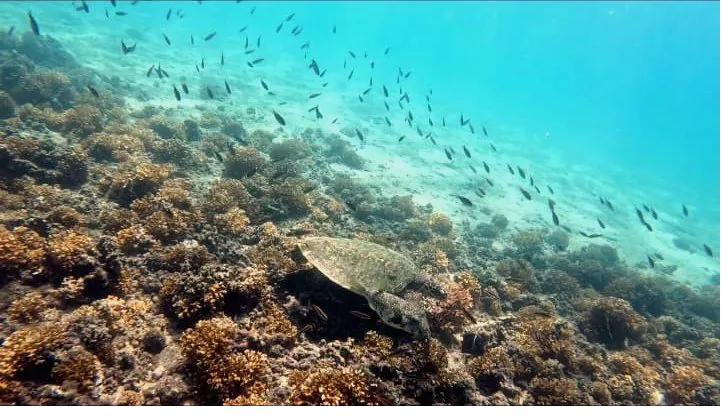
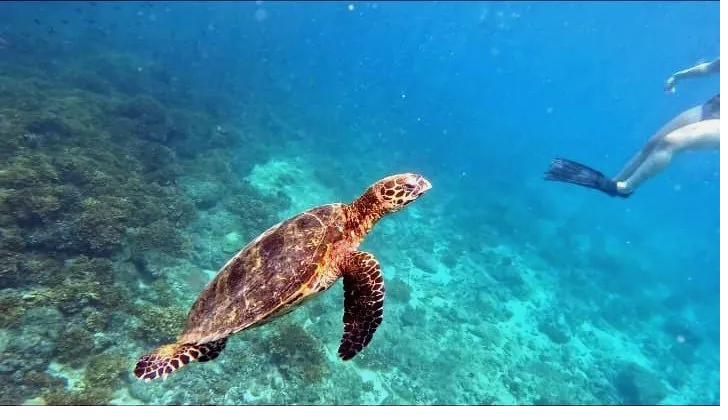
Yes — that's the beauty of it. There's no separate "whale shark tour": sightings happen on ordinary Coiba day trips when the season and the plankton line up. Your guides watch the water constantly on every crossing, and when a whale shark appears, snorkeling with it becomes the day's headline. The rest of the day still delivers turtles, reef sharks, rays and the best reefs in the eastern Pacific — so even without the giant, nobody goes home disappointed. Check the best time to visit Coiba to plan around the season.
Plan your whale shark window
If meeting the ocean's biggest fish is your dream, plan your Coiba days between January and March, give yourself more than one day on the water if you can, and keep your mask within reach on every crossing. The giants don't run on a schedule — but in Coiba, the odds are on your side.