 Snorkel Coiba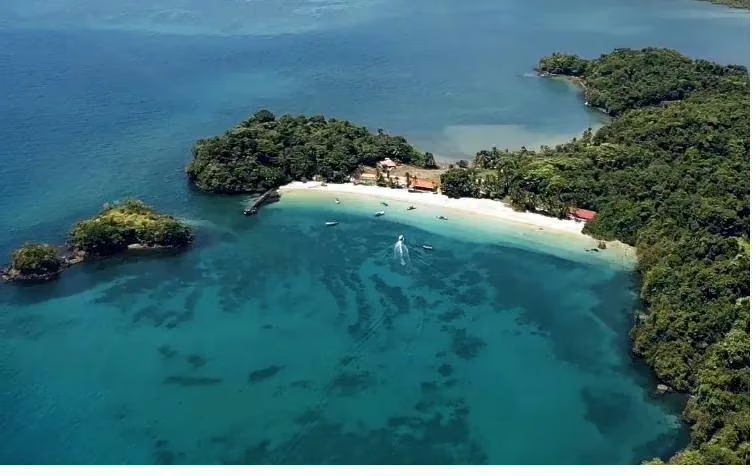
Coiba National Park is the kind of place most travelers never hear about — and the few who do rarely forget it. A former prison island the size of a small country, ringed by the second-largest reef on the Pacific coast of the Americas, declared a UNESCO World Heritage Site in 2005 and still visited by only a tiny fraction of the crowds that fill Costa Rica or the Galápagos. This is everything you need to plan your visit.
What is Coiba National Park?
Coiba National Park protects Coiba Island — the largest island in Central America (about 503 km²) — together with 38 smaller islands and the marine waters around them, roughly 24 km off the Pacific coast of Veraguas, Panama. The park was created in 1991 and inscribed by UNESCO in 2005 for its extraordinary biodiversity: more than 760 species of fish, 33 species of sharks and over 20 species of whales and dolphins have been recorded here. (source: UNESCO)
What makes Coiba truly unusual is its history. From 1919 to 2004 the island was a feared penal colony, which kept settlers, loggers and developers away for almost a century. The result: about 80% of the island is still covered in untouched rainforest, and the reefs around it remain some of the healthiest in the Eastern Pacific. You can read the full story in our article from prison island to paradise.
How to get to Coiba
There is no airport, ferry or bridge to Coiba — every visitor arrives by boat from the town of Santa Catalina. From Panama City you can reach Santa Catalina three ways: a 45-minute charter flight to the Lago Bay airstrip, a 5–7 hour drive on fully paved roads, or public buses via Santiago and Soná (7–9 hours, roughly $16 total). We break down every option, price and schedule in our getting here guide.
From Santa Catalina, licensed operators like us run full-day tours: an early-morning departure, a 1–1.5 hour speedboat ride across the Pacific, several snorkeling stops, lunch on an island and a return between 3:45 and 4:00 pm. We recommend sleeping in Santa Catalina the night before your tour.
What does a Coiba tour cost?
Day tours are remarkably affordable for what you get. Our Coiba Island Tour is $70 per person and includes the boat, a certified local guide, full snorkel gear, life vests and lunch. In season, whale watching runs $70, and private boat charters are quoted to your group. The only extra is the park entrance fee — $20 for foreigners, $5 for Panamanians and residents — paid in cash on arrival.
When to visit Coiba
Coiba is a year-round destination, but the experience changes with the seasons. The dry season (December–April) brings the calmest seas, the best underwater visibility and whale shark season (January–March). The green season (June–November) brings the humpback whales (July–October) — peak sightings in August and September — plus lush rainforest and fewer visitors. Manta rays are most common March–May, and sea turtles nest from mid-July into January. Our full month-by-month breakdown is in the best time to visit Coiba.
Only a few thousand people visit Coiba each year — fewer than many famous parks receive in a single day.
What you'll see
On a typical day of snorkeling you can expect sea turtles, whitetip reef sharks, rays, parrotfish, pufferfish and clouds of tropical reef fish — plus dolphins riding the bow wave on the crossing if you're lucky. On land, Coiba hosts scarlet macaws, howler monkeys and species found nowhere else on Earth, like the Coiba Island howler and the Coiban agouti. American crocodiles patrol the mangrove channels. See our complete marine life guide for the full cast of characters.
Choosing the right Coiba tour
There are three ways to structure your day, and the right one depends on what you're after. The Coiba Island Tour ($70) is the classic: three snorkeling stops at Coco Pequeño, Coco Grande and Islas Canales — plus a visit to Ranchería Island and the Coiba visitor center. From July to October, the Whale Watching Tour (from $700 per boat) adds dedicated time searching for humpbacks on the crossing and between snorkel stops. And if you're a family, a photography group or simply want the boat to yourselves, the Private Tour builds the day entirely around you, from $550 per boat depending on group size.
Whichever you choose, the fundamentals are identical: early departure from Santa Catalina, a certified local guide, all snorkel gear and life vests, lunch, and a return between 3:45 and 4:00 pm.
A day in Coiba, hour by hour
Tours meet at our meeting point in front of the beach in Santa Catalina early in the morning — at 8:00 am — for gear fitting and a short briefing. By 8:30 at the latest you're skimming across the Pacific; keep your eyes open, because dolphins often join the boat and, in season, this crossing is prime whale-spotting time. The first snorkel stop comes mid-morning when the light is already beautiful underwater. After a second reef, lunch is served on an island beach — fresh, generous, and with vegetarian or vegan options if you tell us in advance. The afternoon brings one or two more stops, and by 15:00–16:00 you're back in Santa Catalina, salty, sun-warmed and scrolling through GoPro footage.
Where to stay in Santa Catalina
Santa Catalina is a small, laid-back surf town — that's a feature, not a bug. You'll find everything from backpacker hostels and surf camps to comfortable boutique hotels and beachfront cabins, most within walking distance of the main street where tours depart. Because tours leave early, we strongly recommend arriving the day before and staying the night; you'll start the day rested and won't risk missing the boat to a 5 a.m. drive. Many guests stay a second night after the tour to enjoy the town's famous surf break, its restaurants and a proper sunset.
Park rules & how to be a good visitor
Coiba's health is no accident — it's protected by rules every visitor follows. Don't touch or stand on coral, don't feed or chase wildlife, and keep a respectful distance from turtles and sharks (they'll come to you if you're calm). Use reef-safe sunscreen, or better yet a rash guard, since common sunscreen chemicals damage coral. Take every piece of trash back to the mainland. And bring a clear photo of your passport or ID on your phone — rangers check details at the station, and the original is safer left at your accommodation, and the entrance fee you pay in cash goes directly toward keeping this place wild for the next generation of visitors.
What to bring
Pack light: swimsuit, towel, reef-safe sunscreen, hat, water shoes, a dry change of clothes — and the two non-negotiables: a photo of your passport or ID and cash for the park fee. We provide all snorkel gear and lunch, and you can rent a waterproof GoPro HERO 11 from us for $30/day. Full checklist in what to pack for Coiba.
Ready to see Coiba for yourself?
Tell us your dates and group size — we'll confirm availability and answer every question on WhatsApp, usually within the hour.
Book your Coiba tourChat on WhatsAppFrequently asked questions
Can I visit Coiba without a tour?
No. Access is regulated by the park authority and visitors must arrive with a licensed boat operator from Santa Catalina. Independent boats and overnight camping are not permitted for regular tourists.
Do I need to know how to swim?
No — everyone wears a life vest, guides stay close, and tours adapt to all comfort levels. Many of our happiest guests were first-time snorkelers.
Is Coiba safe to visit?
Yes. The prison closed in 2004 and the island is now a protected national park with ranger stations. Tours follow park rules and guides are trained in water safety. (2026 update: since June 2026 a small high-security detention unit operates inside the island's naval station — a closed military zone far from every visitor area. Day tours are unaffected; full details in our news article.)
Can children visit Coiba?
Absolutely — Coiba is a fantastic family day trip. Let us know the kids' ages when booking and we'll prepare the right size gear.
How far in advance should I book?
In high season (December–April) and during whale season weekends, a few days to a week ahead is wise. Message us on WhatsApp and we'll confirm your date immediately.
Coiba rewards the small effort it takes to reach it like few places on the planet. Start with our classic Coiba Island Tour, check the FAQ, and when you're ready, reserve your spot — we'll take care of the rest.