 Snorkel Coiba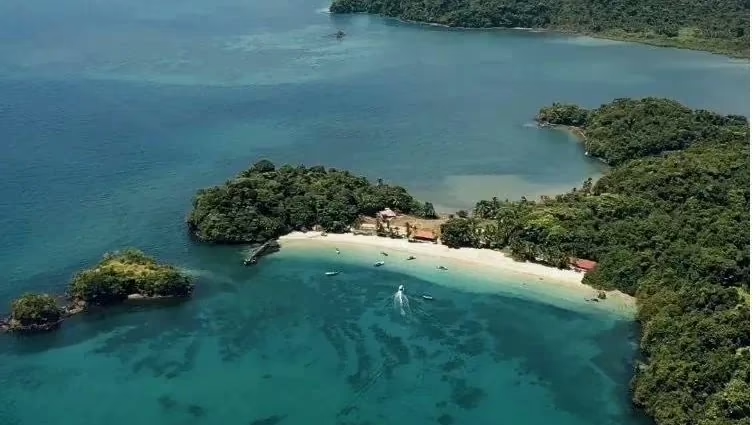
Every year when the Atlantic hurricane season starts (June to November), the same question lands in our WhatsApp: "What if a hurricane ruins my Coiba trip?" The answer puts anyone at ease: a hurricane has never made direct landfall in Panama. It's not luck — it's latitude. Here's why this corner of the Pacific is one of the most hurricane-safe tropical destinations on the continent.
The short answer: no — and it has never happened
Panama is recognized as the one Central American country that sits outside the hurricane belt. The historical record backs it up: no hurricane has ever struck Panama directly. While islands in the northern Caribbean rebuild after every bad season, here hurricane season passes as heavier rain — and nothing more.
The reason is latitude: 7 to 9 degrees north
Panama — and Coiba with it — lies between 7 and 9 degrees north latitude, very close to the equator. Hurricanes need to form at 10 degrees or more from the equator, because they depend on the Coriolis effect (the Earth's rotation) to spin up their winds. This close to the equator, that effect is too weak: the storm simply can't organize its rotation. It's a physical, permanent protection that doesn't depend on chance.
What hurricane season does bring to Panama
Being immune to a direct hit doesn't mean perfect skies: when hurricanes are active in the distant Caribbean, their outer bands can bring Panama rainier days than usual, especially between September and November. It's rain, not destructive wind. In practice, for your tour it means the same as any green-season day: afternoon downpours and mornings that are generally good for the boat.
Coiba vs. the northern Caribbean: planning without fear
If you've ever tried to plan a trip to certain Caribbean islands between August and October, you know the roulette: book with cancellation insurance and cross your fingers. At Coiba that roulette doesn't exist. You can book your tour at the height of the Atlantic hurricane season — which also happens to be humpback whale season (July–October) — with no fear of a cyclone wiping out your vacation week.
Tropical storms yes, hurricanes no
Let's be precise, because we value telling you the truth: Panama does get spectacular thunderstorms in the rainy season, and very occasionally the remnants of a tropical system bring heavy rain. That's why we monitor the sea every day and only go out when it's safe. If you want to understand how those rains work and why the day starts at 8:00 am, we cover it fully in our article on Coiba's weather and storms.
What this means for your trip
It means you can plan Coiba any month of the year with a peace of mind few tropical destinations can offer. December to April for near-guaranteed sun; May to November for the greenest landscapes, fewer people and whales — and in both cases, zero hurricanes. Check our guide to the best time to visit Coiba and lock in your date on the Coiba Island tour.
A tropical paradise without the hurricane roulette
Book your Coiba day with the local team, any month of the year. Full tour with certified guide, gear and lunch from $70.
Book on WhatsAppSee the Coiba tour