 Snorkel Coiba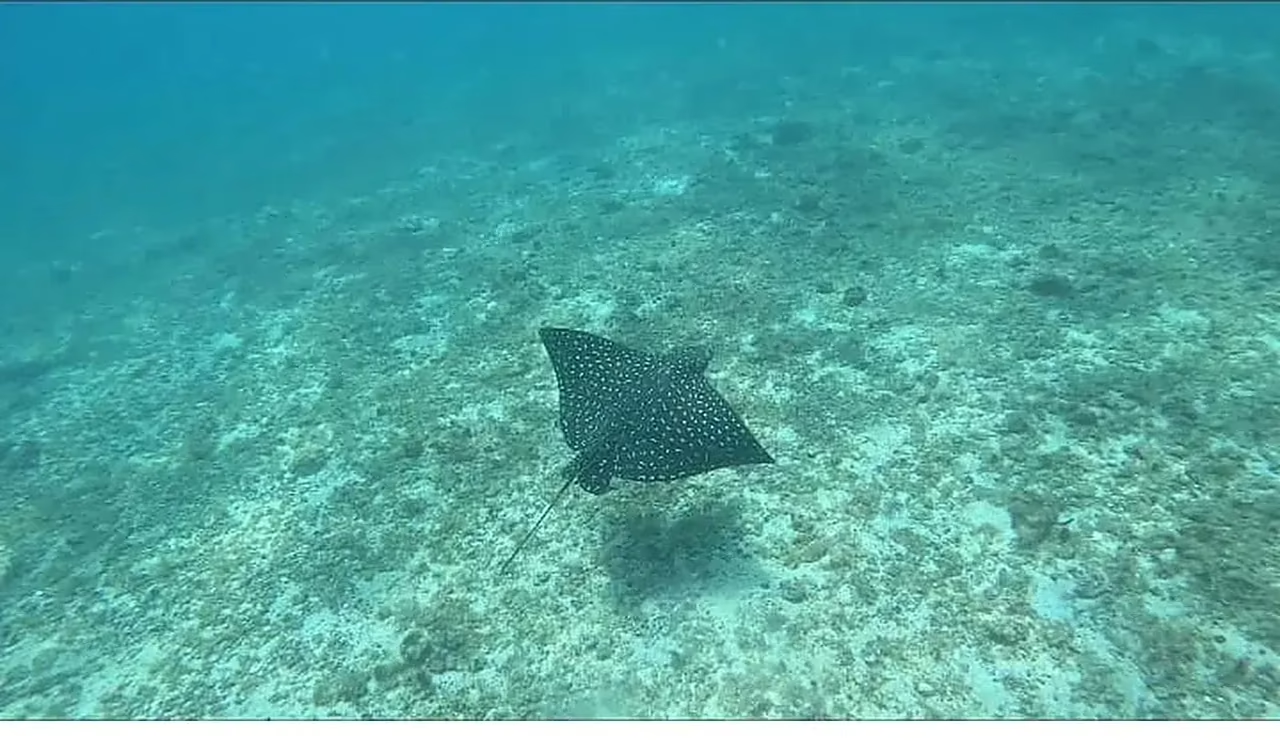
Few sights underwater are as hypnotic as a spotted eagle ray gliding across the sand — wings rippling like a slow-motion bird, a constellation of white spots scattered over dark blue skin, and a long ribbon of tail trailing behind. In Coiba National Park, these graceful rays are one of the most reliably thrilling snorkeling encounters, and you don't need to be a scuba diver to see them. Here's what lives in these waters, where and when to look, and how to share the water respectfully.
Meet the spotted eagle ray
The star of the show is the spotted eagle ray (Aetobatus), instantly recognisable by the pattern of pale spots and rings across its back and a flat, diamond-shaped body that can span up to two or three metres across the wings. Unlike stingrays that lie buried in the sand, eagle rays are active swimmers, cruising just above the seabed as they hunt for clams, crustaceans and small molluscs with their distinctive duck-like snout. They're shy and non-aggressive — the moment you see one is usually a moment of pure grace, not adrenaline. When you snorkel over Coiba's sandy channels and reef edges, keep scanning the open bottom: eagle rays are often out in the blue where the reef meets the sand.
Other rays you might meet in Coiba
Eagle rays are the headliners, but they're not the only rays in these waters. Depending on the site and the season, snorkelers and divers in Coiba also encounter:
- Giant manta rays and mobula (devil) rays — the ocean's gentle giants, sometimes seen cruising near the surface or, in the case of mobulas, travelling in schools that occasionally leap clear of the water.
- Stingrays — diamond and whiptail stingrays rest on sandy patches, often only their outline and eyes visible until they glide away in a puff of sand.
- Round and marbled rays — smaller bottom-dwellers that blend beautifully into the reef rubble.
Snorkelers welcome
You don't need a dive certification to see rays in Coiba. Most eagle-ray and stingray encounters happen in shallow, sunlit water right where we snorkel — over the sandy edges of the reef. Bring a mask that fits, and you're set. New to it? Start with our snorkeling for beginners guide.
Where and when to see rays
Coiba's marine park protects one of the largest and healthiest reef systems in the Eastern Tropical Pacific, and rays are seen across many of its snorkeling sites throughout the year. Visibility and the odds of a big-ray day are generally best in the dry season (mid-December to April), when the water is calmest and clearest, but Coiba delivers year-round. Eagle rays tend to appear over open sand and along reef drop-offs; mantas and mobulas are more of a lucky, open-water surprise. Because every day on the water is different, patience and a bit of luck are part of the magic — but sightings here are common enough that rays are one of the animals guests remember most. For a month-by-month breakdown, see our guide to the best time to visit Coiba.
What else you'll see alongside the rays
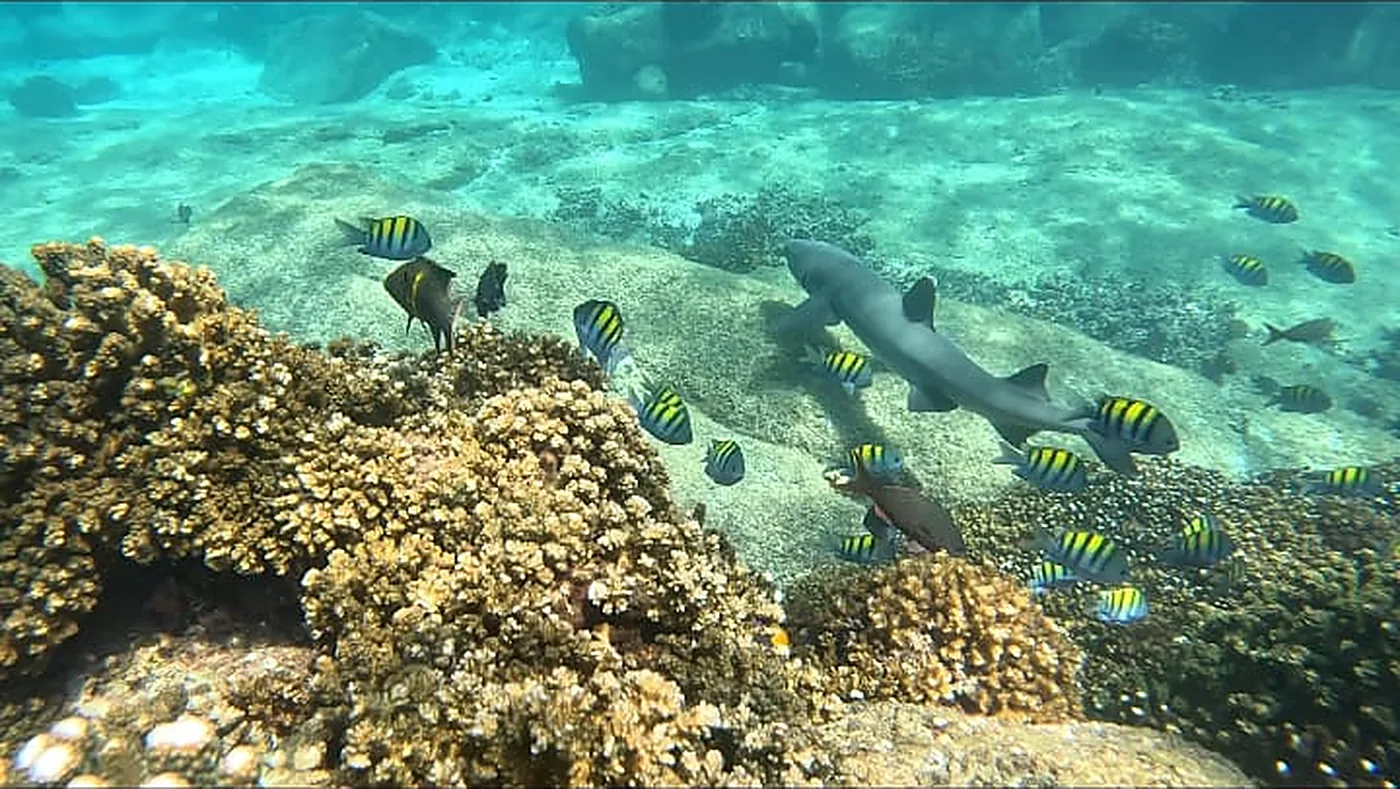
The same reefs that host the rays are alive with the rest of Coiba's cast: whitetip reef sharks resting on the sand, green and hawksbill sea turtles, huge schools of snapper and jack, moray eels, and clouds of tropical reef fish among more than 760 recorded species. If sharks are on your wish list, read our guide to swimming with reef sharks in Coiba, or browse the full cast in our Coiba marine life overview.
How to snorkel respectfully with rays
Rays are wild animals in a protected national park, and a good encounter is a calm one — for you and for them. A few simple habits make all the difference:
- Look, don't touch or chase. Let the ray set the distance. Chasing only ends the encounter faster.
- Move slowly and float. Sudden movements and splashing spook rays; relaxed, quiet snorkelers get the longest, closest views.
- Give stingrays space on the bottom. Never corner a resting ray or block its exit.
- Reef-safe sunscreen only, and never touch or stand on the coral.
See the rays for yourself
A full day snorkeling Coiba with us covers several reef and sand sites, giving you the best possible chance at eagle rays, turtles, reef sharks and the park's spectacular fish life — with gear, life vests, a local guide and lunch on a deserted beach included, from $70. We're the local team that takes you out, never a middleman. Have a look at the Coiba Island snorkeling tour, or the best snorkeling spots in Coiba.
Come glide with the eagle rays
One day, several island reefs, and a real chance to watch eagle rays, turtles and reef sharks in a UNESCO-protected marine park — from $70, gear and lunch included.
Book your Coiba tourChat on WhatsApp