 Snorkel Coiba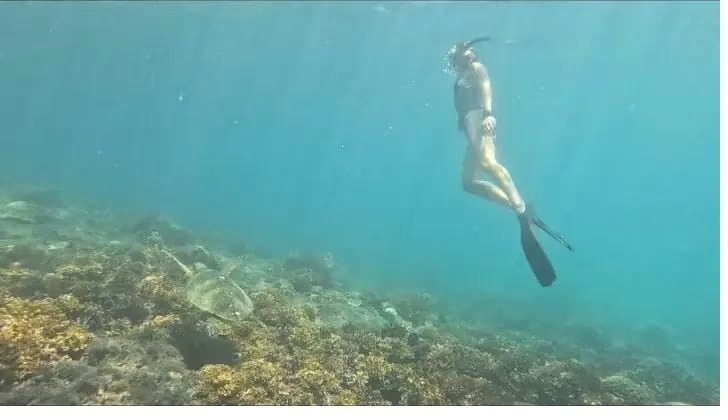
Never snorkeled before? Coiba is one of the best places in the world to start. The water is warm and calm, life vests are provided for everyone, certified guides stay in the water with you, and the reefs are so full of life that even a first-timer floating face-down will likely see a sea turtle within minutes. Here's exactly what to expect — and why you don't need to be a strong swimmer to have the day of your life.
Do I need to know how to swim?
Not to enjoy a Coiba snorkeling tour. Every guest wears a life vest that keeps you floating effortlessly at the surface, and a guide is always nearby. You're not diving down — you're relaxing on top of the water, breathing through a tube, watching the reef below. Confident swimmers can range a little farther and free-dive if they like, but plenty of our happiest guests would never call themselves swimmers. The one thing we ask: tell your guide how comfortable you are in water when you arrive, so they can look after you properly.
What is snorkeling, exactly?
Snorkeling is simple: you wear a mask (to see clearly underwater), a snorkel (a tube that lets you breathe with your face in the water) and fins (to move easily without using your arms). You float on the surface, breathe calmly through the snorkel, and look down at the reef. There's no air tank, no diving certification and no special training required — if you can float in a life vest and breathe through your mouth, you can snorkel.
What you'll see in Coiba
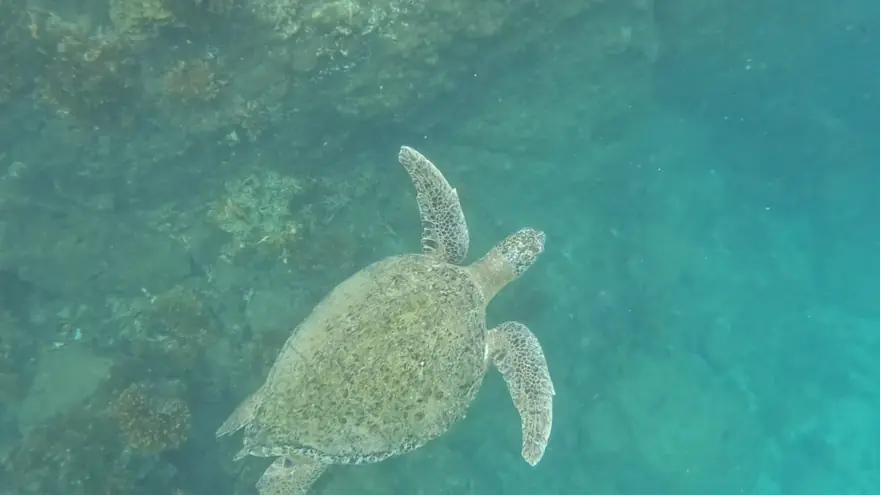
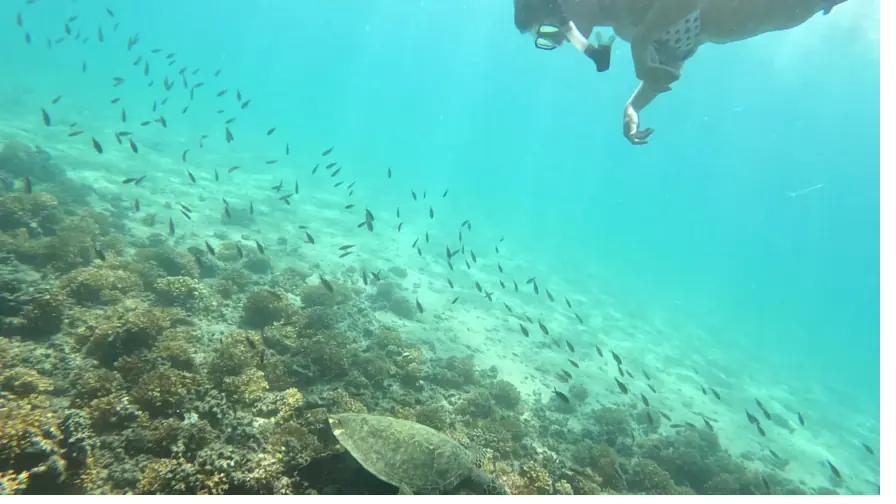
This is what makes it worth it. Coiba protects 760+ fish species and some of the healthiest reefs in the Eastern Pacific. On a typical day, beginners regularly see green and hawksbill sea turtles, harmless whitetip reef sharks resting on the sand, rays, dazzling parrotfish, and swirling schools of tropical fish — sometimes dolphins on the boat ride out. For a full preview of the cast, see our Coiba marine life guide.
What's included on our tours
You don't need to own anything. Every Coiba Island snorkeling tour includes:
- Mask, snorkel and fins sized to fit you — just tell us your shoe size.
- A life vest for every guest, so you float comfortably the whole time.
- A certified local guide who stays in the water with the group.
- A safe, well-maintained boat and a crew you can trust.
- Lunch on the island — vegetarian and vegan on request.
Want to keep the memories? You can rent a waterproof GoPro HERO 11 for $30/day and we'll help you film your first turtle.
How a beginner's day works
Here's the shape of a typical day so there are no surprises:
- We meet at 8:00 am at Restaurante Pingüinos in Santa Catalina, and the boat leaves at 8:30 am.
- On the way to Coiba, your guide gives a relaxed briefing — how to wear the mask, how to breathe, what to do if water gets in.
- We make three snorkel stops at calm, shallow reefs, starting easy. You go at your own pace; there's no rush.
- We break on a beautiful island beach for lunch and time to relax.
- We're back in Santa Catalina between 3:45 and 4:00 pm — depending on sea conditions — full of stories.
Ten tips for your very first snorkel
- Defog your mask. A quick rub of defog (or even a little saliva) on the dry lens, then a rinse, stops it from clouding up.
- Get the mask seal right. Keep stray hair out from under the skirt, and tighten the strap just enough — too tight actually causes leaks.
- Practice in the shallows first. Put your face in calm, shallow water and just breathe through the snorkel until it feels natural.
- Let the vest do the work. You don't need to fight to stay up. Relax your body and float.
- Breathe slow and calm. Long, easy breaths through your mouth. Calm breathing keeps you relaxed and your mask clear.
- Kick gently from the hips. Slow, steady fin kicks — no fast bicycle motion, no using your arms.
- Clear water with a sharp puff. If a little water sneaks into the snorkel, just blow out firmly through your mouth to clear it.
- Never touch the coral or wildlife. Look, don't touch — for your safety and the reef's.
- Stay with your guide and a buddy. Keep the group in sight; your guide is there to help anytime.
- Look up now and then. Lift your head occasionally to check where you are and where the boat is.
You don't have to be a swimmer, an athlete or an adventurer. You just have to be willing to float and look down — Coiba does the rest.
Nervous? Tell us
If it's your first time or you're anxious in water, message us before you book. We'll match you with the calmest reefs, keep you close to a guide, and make sure your first snorkel is a joy, not a stress.
Is it safe?
Snorkeling is one of the gentlest ways to experience the ocean, and we take safety seriously: life vests for all, certified guides in the water, well-maintained boats, and reefs chosen for calm, shallow conditions. We go at your pace, never the other way around. If the sea is rough on a given day, we choose sheltered spots or adjust the plan — your comfort and safety come first.
Snorkeling with kids
Coiba is wonderful for families — warm water, life vests, and turtles that delight children and adults alike. We have a whole guide dedicated to it: snorkeling Coiba with kids.
What to bring
We provide the snorkeling gear; you bring sun protection and a few essentials. Reef-safe sunscreen, a rash guard, a hat, a towel and a dry bag cover most of it — the full checklist is in our Coiba packing list.
Your first snorkel, somewhere unforgettable
Warm water, easy reefs, turtles within minutes and a guide by your side — from $70. No experience needed.
Book your beginner-friendly tourAsk us anything on WhatsAppFrequently asked questions
Can I snorkel if I can't swim?
Yes — with a life vest and a guide nearby, non-swimmers snorkel safely and happily in Coiba every week. Just let your guide know so they can stay close.
Do I need a wetsuit?
No. Coiba's water sits at a comfortable 24–28 °C year-round, so a swimsuit or rash guard is all you need.
What if I wear glasses?
Contact lenses work fine under a mask. If you wear glasses, you'll still see the reef clearly because the mask itself magnifies slightly underwater — and you can let us know in advance.
Will I see sharks — are they dangerous?
You may well see whitetip reef sharks, and they're harmless to snorkelers — usually resting calmly on the sand. They're one of the highlights, not a hazard.
What's the best age for kids to start?
Comfortable, water-confident children often do well from around school age with a life vest and close supervision. See our family guide for details.
When you're ready to take the plunge, the Ultimate Guide to Visiting Coiba covers everything else — or just book your first snorkel and we'll take care of you from the first message.