 Snorkel Coiba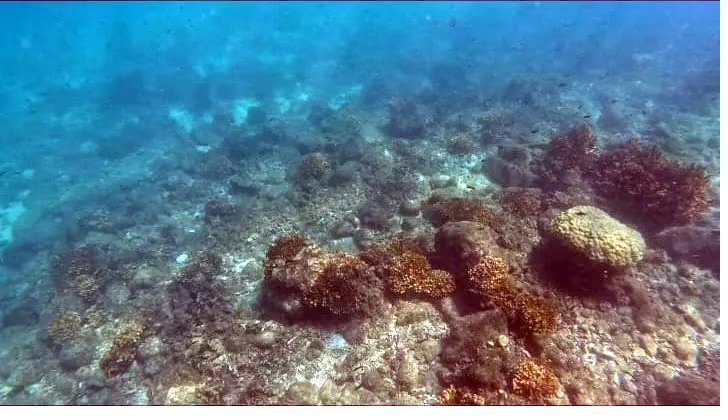
Coiba is often called the "Baby Galápagos" or the "Galápagos of Central America" — and the comparison isn't marketing fluff. Both are Pacific island groups protected as UNESCO World Heritage Sites, both sit on great ocean current crossroads, and both shelter species found nowhere else on Earth. But they offer very different trips, at very different prices. Here's an honest comparison to help you choose.
What they have in common
Coiba and the Galápagos are both part of the Eastern Tropical Pacific Marine Corridor — a chain of protected waters (together with Costa Rica's Cocos Island and Colombia's Malpelo) that sharks, whales, turtles and rays use as a migration highway. Both were isolated long enough to evolve endemic species: the Galápagos has its famous finches, tortoises and marine iguanas; Coiba has the Coiba Island howler monkey, the Coiban agouti and one of Central America's last healthy wild populations of scarlet macaws.
Underwater, the family resemblance is strongest: volcanic and rocky reefs, huge schools of fish, sharks, rays, turtles and seasonal giants — humpback whales in both, whale sharks in both.
The big differences
1. Cost
This is where the gap is dramatic. A Galápagos trip means flying to Ecuador, a second flight to the islands, a national park entrance fee of around $200 per foreign visitor, and either a cruise or island hotels — realistically $2,000–$6,000+ per person for a week. Coiba? The park fee is $20, a full-day tour with lunch and gear is $70, and Santa Catalina offers accommodation from backpacker to boutique. A spectacular three-day Coiba experience can cost less than a single day in the Galápagos.
2. Crowds
The Galápagos receives hundreds of thousands of visitors a year, with strict scheduling to manage boat traffic at each site. Coiba receives only a few thousand — it's normal to snorkel a reef with no other boat in sight.
3. Wildlife encounters
The Galápagos is unbeatable for fearless land wildlife — sea lions napping on benches, iguanas underfoot. Coiba's land animals are wilder and shyer, but its underwater experience rivals the Galápagos at a fraction of the cost, and the warm water (24–28 °C year-round) is friendlier than the Galápagos' chilly currents — no thick wetsuit needed for snorkeling.
4. Getting there
Galápagos: two flights and a tight itinerary. Coiba: a scenic drive or short charter flight from Panama City to Santa Catalina, then a 1–1.5 hour boat ride. You can decide to visit Coiba tomorrow.
If the Galápagos is nature's museum, Coiba is nature's back room — fewer labels, fewer visitors, and the collection still being discovered.
Two very different origin stories
The Galápagos became legend the moment a young Charles Darwin stepped ashore in 1835; its finches and tortoises helped spark the theory of evolution, and the islands have been studied, filmed and celebrated ever since. Coiba's path to protection could not be more different: it was preserved by accident. From 1919 to 2004 the island was Panama's most feared penal colony, and the dread surrounding it kept fishermen, loggers and developers away for 85 years. When the prison finally closed, scientists found an ecosystem the modern world had essentially skipped — read the full story in our history of Coiba. One sanctuary was born from science, the other from fear; both ended up priceless.
Snorkeling and diving, compared honestly
In the Galápagos, the marquee experiences — hammerhead schools at Darwin and Wolf, marine iguanas grazing underwater — mostly demand liveaboard diving trips and cold-water tolerance. Snorkelers still see wonderful things, but the chilly, nutrient-rich water means thick wetsuits and visibility that varies wildly. Coiba flips that equation: its warm 24–28 °C water makes snorkeling the headline act, accessible to anyone who can float in a life vest. Turtles, whitetip reef sharks, rays, parrotfish and huge schools of jacks are regular sightings on a $70 day trip — no certification, no wetsuit, no liveaboard budget. Divers aren't left out either: Coiba's deeper pinnacles attract sharks and pelagics that rival far more famous sites, with a fraction of the boats.
Best time to visit each
The Galápagos is genuinely year-round, split between a warm season (December–May, calmer and clearer water) and the cooler garúa season (June–November, richer feeding activity). Coiba follows Panama's rhythm: the dry season (December–April) brings the calmest seas, best visibility and whale sharks, while the green season (June–November) brings humpback whales (July–October) — peak August–September — lush forest and the fewest visitors. The practical difference: a Coiba trip is easy to time around a single highlight (whales, whale sharks, glassy water) because you can decide just days in advance. Our month-by-month guide breaks it down.
Sample budgets, side by side
A realistic mid-range Galápagos week: international flights to Ecuador, round-trip flights to the islands (≈ $400–500), the ≈ $200 park fee, plus either an island-hopping setup (≈ $150–300 per day with day tours) or a cruise (commonly $400–800+ per person per night). Most travelers land between $2,500 and $6,000 per person before international airfare. A superb Coiba long weekend: bus or drive from Panama City, three nights in Santa Catalina (from ≈ $20 hostel to ≈ $120 boutique per night), the $20 park fee once, the island tour ($70) plus whale watching (optional, from $700 per boat — not included in this total) — comfortably under $500 per person, often far less. That's not a typo; it's the quiet advantage of a destination the world hasn't fully noticed yet.
The conservation story you join by visiting
Here's a part of the comparison that rarely makes the brochures: your visit is a conservation vote. The Galápagos pioneered the model of tourism funding protection, and it works — but the system is mature and well-funded. Coiba's protection is younger and runs leaner: park fees, ranger stations and patrols depend heavily on the modest income that responsible tourism generates. Every entrance fee and every tour booked with operators who follow park rules strengthens the case that a wild Coiba is worth more than an exploited one. Visiting the underdog sanctuary isn't just cheaper — it arguably matters more.
Can you do both?
Absolutely — and they complement each other beautifully. Panama City is a major hub with direct flights throughout the Americas, so travelers heading to or from Ecuador can add Coiba with two or three extra days. Many of our guests treat Coiba as the "warm-up" or the "encore" to a Galápagos trip — and more than a few have told us, somewhat sheepishly, which one their photos came out better from.
So which should you choose?
Choose the Galápagos if it's a once-in-a-lifetime bucket-list trip, your budget is generous, and walking among fearless wildlife is the dream. Choose Coiba if you want world-class snorkeling and whale watching without the crowds or the price tag, you're already traveling in Central America, or you simply love places that still feel undiscovered. And honestly? Many travelers who've done both tell us the same thing: Coiba's underwater life surprised them more — precisely because nobody had hyped it.
Experience the 'Baby Galápagos' for $70
One day, 3 snorkel stops on three islands, turtles, sharks, rays and lunch on the beach. See why Coiba earns the comparison.
Book your Coiba tourChat on WhatsAppFrequently asked questions
Is Coiba really comparable to the Galápagos?
For marine life, genuinely yes — both are UNESCO sites on the same migration corridor with reef sharks, turtles, rays, whales and whale sharks. For land wildlife, the Galápagos remains unique. For value and solitude, Coiba wins easily.
Can I see endemic species in Coiba?
Yes — the Coiba Island howler monkey and Coiban agouti live only here, and scarlet macaws are far easier to see in Coiba than almost anywhere else in Panama.
Do I need a wetsuit in Coiba?
No — water temperatures of 24–28 °C make snorkeling comfortable in just a swimsuit or rash guard all year.
How many days do I need for Coiba?
One full day shows you the highlights; two or three days (combining the island tour and seasonal whale watching) makes a world-class mini-expedition.
Whichever you choose, you'll be supporting one of the planet's great marine sanctuaries. And if Coiba wins your vote, our Ultimate Guide to Visiting Coiba has everything you need — or just book your day on the water and let us handle the details.