 Snorkel Coiba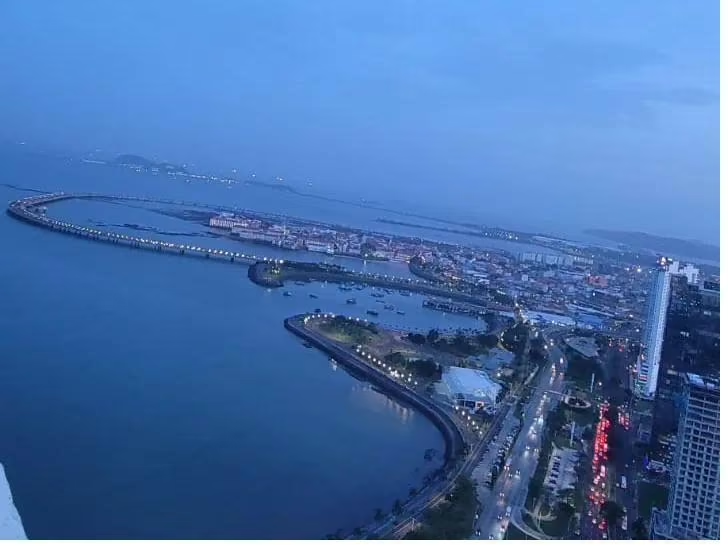
Panama City is a place of beautiful contradictions: gleaming glass towers rise beside a 500-year-old colonial quarter, container ships glide past the skyline on their way through the world's most famous canal, and a short drive in any direction lands you in rainforest or on the Pacific. If you only know it as a layover, this guide will change your mind — and show you how to pair a few days in the capital with a real adventure on the wild Pacific coast.
Why Panama City surprises almost everyone
Most travelers arrive expecting a quick stopover and end up wishing they had booked more nights. Panama City is the most cosmopolitan capital in Central America, with a skyline that rivals Miami, a UNESCO-listed old town and tropical wildlife living inside the city limits. It is also wonderfully easy: people are friendly, the US dollar is the currency, ride-hailing apps work everywhere, and you can cross the whole city in under an hour. Two or three days is plenty to see the highlights — and the perfect warm-up before heading to the coast.
1. See the Panama Canal in action
No visit is complete without watching a ship rise or fall inside the locks of the Panama Canal. The Miraflores Visitor Center, on the Pacific side just outside the city, has viewing decks, a museum and a film that explain how this engineering marvel lifts vessels roughly 26 metres between sea levels. If you want to see the giant Panamax ships, the newer Agua Clara locks near Colón, on the Caribbean side, make a great day trip. Check the ship schedule before you go — transits cluster at certain hours, and an empty lock is far less impressive than a loaded container ship squeezing through with metres to spare.
2. Get lost in Casco Viejo
Casco Viejo (also called Casco Antiguo or San Felipe) is the historic heart of the city and a UNESCO World Heritage Site. Founded in 1673 after pirates destroyed the original settlement, its narrow streets are lined with restored colonial mansions, leafy plazas, boutique hotels and some of the best restaurants and rooftop bars in the country. Wander Plaza de la Independencia, step inside the Iglesia de San José to see its famous golden altar, and finish at sunset on a rooftop with a cocktail and a front-row view of the modern skyline glowing across the bay.
3. Walk or cycle the Cinta Costera
The Cinta Costera is a long waterfront park that hugs the bay between the old town and the banking district. Locals come here to jog, cycle, skate and unwind, and it offers one of the best free views in the city — the towers on one side, the colonial domes of Casco Viejo on the other. Rent a bike or simply walk a stretch at golden hour. Nearby, the Mercado de Mariscos (fish market) serves cheap, fresh ceviche in paper cups; it is a local rite of passage.
4. Explore the Amador Causeway and the Biomuseo
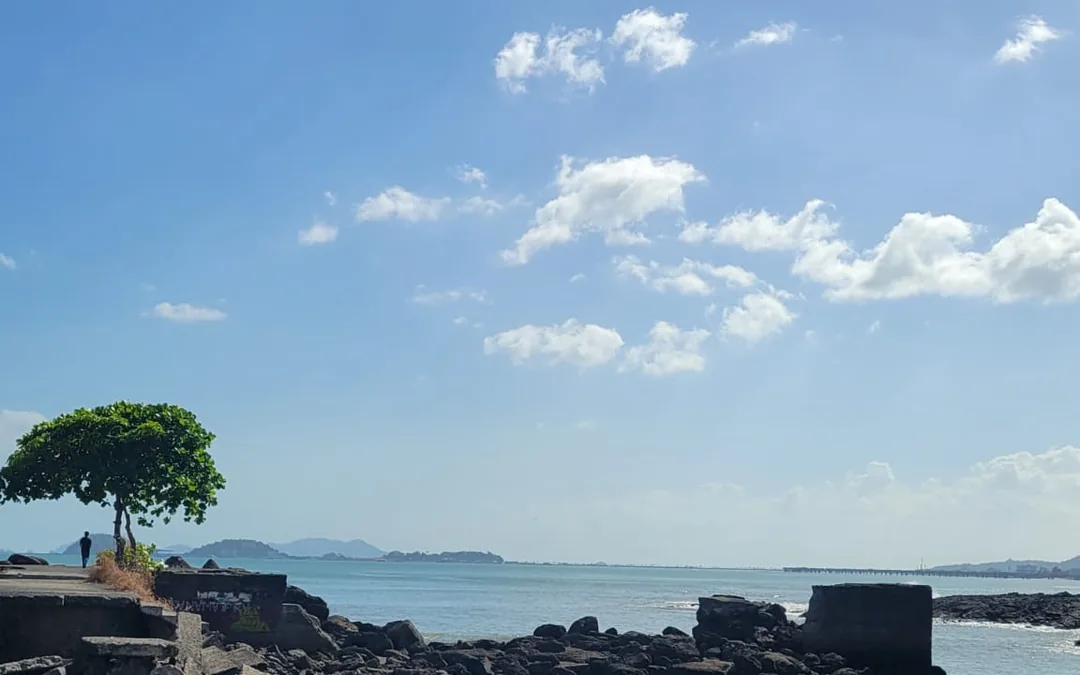
The Amador Causeway is a palm-lined road built from rock excavated during the canal's construction, linking a string of small islands to the mainland. It is the place to come for sea breezes, bike rides and panoramic views of both the skyline and the line of ships waiting to transit the canal. At its entrance stands the Biomuseo, the only building in Latin America designed by architect Frank Gehry — a riot of colour that tells the story of how the Isthmus of Panama rose from the sea and changed the planet's climate and wildlife forever.
5. Feel the pulse of the modern city on Calle 50
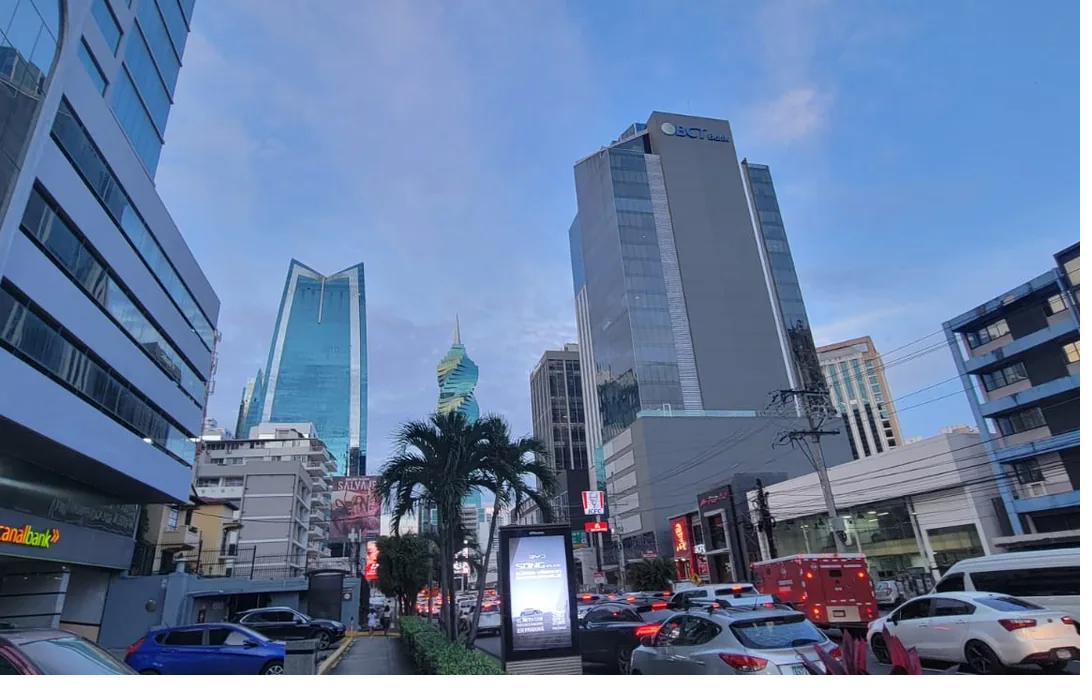
For the full picture of Panama, spend an hour in the banking district around Calle 50 and the Área Bancaria. This is where Latin America's financial capital shows off: mirrored corporate towers, the twisting F&F Tower (locals call it "el tornillo", the screw), shopping centres and a buzz of traffic and business. It is a striking contrast to the colonial calm of Casco Viejo, and proof of how far this small country has come.
6. Find nature without leaving town
Few capitals can offer rainforest within the city. The Metropolitan Natural Park protects a patch of tropical forest just minutes from downtown, with easy trails where you can spot sloths, monkeys, toucans and agoutis, plus a lookout over the skyline. For the best panoramic view in the city, climb or drive up Ancon Hill (Cerro Ancón), the highest point in Panama City, crowned by a huge national flag.
Where to eat and drink
Panamanian food is a delicious mix of Caribbean, Pacific and Spanish influences. Don't miss ceviche, sancocho (a hearty chicken soup), patacones (fried green plantains) and fresh Pacific seafood. Panama is also serious coffee country — beans from the highlands of Boquete, including the prized Geisha variety, are among the best in the world. Casco Viejo and the banking district have the widest choice of restaurants, from street food to fine dining.
Where to stay
Two areas make the best bases. Casco Viejo is romantic and walkable, with boutique hotels and the liveliest nightlife, though rooms book up fast. The modern districts around Calle 50, Marbella and Punta Pacífica offer high-rise hotels, shopping and easy access to the airport. Both are well connected, so choose by the vibe you want.
Getting around
Panama City is easy to navigate. Ride-hailing apps are cheap and reliable, the modern Metro connects key areas, and most attractions are a short drive from one another. From Tocumen International Airport, it is roughly a 30 to 45 minute ride into the city depending on traffic.
How many days do you need?
Two full days lets you cover the canal, Casco Viejo, the Cinta Costera and the Amador Causeway at a relaxed pace. Add a third for the Metropolitan Park, a museum or a longer canal visit. But the smartest move is to treat the city as the start of a bigger trip — because the very best of Panama is out on the water.
Pair the city with the wild Pacific
Once you have seen the capital, head west to the Pacific coast and the fishing village of Santa Catalina, the gateway to Coiba National Park. Coiba is a UNESCO World Heritage marine reserve with more than 760 species of fish, manta rays, sea turtles, reef sharks and — between July and October — migrating humpback whales. A day of snorkeling in Coiba is the kind of experience that turns a good trip into an unforgettable one. See our guide on how to get to Coiba to plan the journey from the city.
Make Coiba the highlight of your trip
You have seen the city — now see the wild Pacific. Spend a day snorkeling one of the world's last untouched reserves. We handle the boat, the guide and the gear.
Book your Coiba tourChat on WhatsApp