 Snorkel Coiba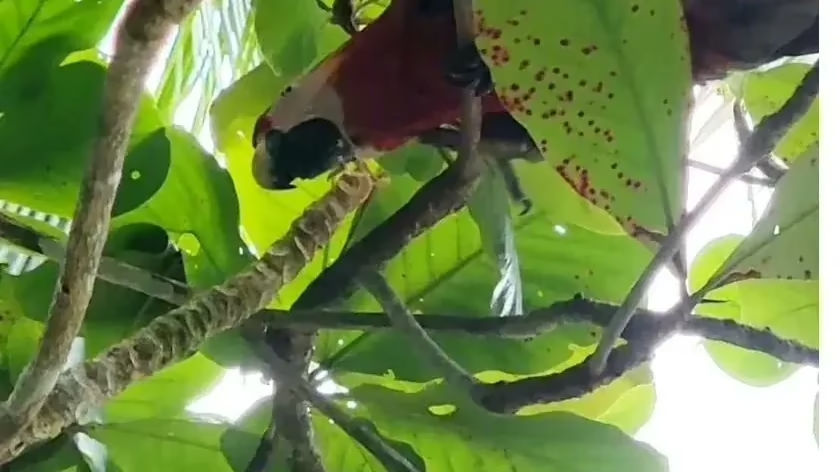
Most people come to Coiba for the snorkeling — and rightly so. But as your boat approaches the island, look up. Coiba's untouched Pacific rainforest is one of the richest bird habitats in Panama, protected for over a century by the very prison that kept the island wild. For birdwatchers, it's a living museum of species that have vanished almost everywhere else.
Why Coiba is a birdwatcher's paradise
Because a penal colony occupied the island from 1919 to 2004, Coiba was left almost completely undeveloped while the rest of Panama was logged and farmed. The result is roughly 75% standing ancient forest — a refuge where birds that disappeared from the mainland still thrive. Coiba is officially designated an Important Bird Area (IBA) by BirdLife International, with more than 147 recorded bird species, of which around 96 live on Coiba Island itself.
What makes it special isn't just the numbers — it's the endemism. The island's long isolation has driven the evolution of 20 endemic bird subspecies that exist nowhere else, plus a full species, the Coiba spinetail, found only here and on neighboring Ranchería Island.
What is an "endemic" species?
An endemic species or subspecies is one that lives in a single place on Earth and nowhere else. When you see one on Coiba, you are looking at a bird that exists only on this island — which is exactly why scientists and birders travel so far to find them.
The star of the show: wild scarlet macaws
If there is one bird that defines Coiba, it is the scarlet macaw (Ara macao). These brilliant red, blue and gold parrots have virtually disappeared from mainland Panama — and Coiba is the only place in the country where you can still see wild flocks of them in significant numbers. Hearing a pair fly overhead, calling to each other against the green canopy, is one of those travel moments you don't forget.
Coiba is also one of the last strongholds in all of Central America for this threatened species, which makes every sighting both thrilling and a quiet reminder of how rare untouched habitat has become.
Coiba's endemic and signature birds
Beyond the macaws, keep your eyes (and ears) open for these specialties:
- Coiba spinetail (Cranioleuca dissita) — a small ovenbird endemic to Coiba and Ranchería Islands, found absolutely nowhere else in the world. This is the bird serious listers come for.
- Brown-backed dove (Leptotila battyi) — a vulnerable species that finds refuge in Coiba's forests.
- Crested eagle (Morphnus guianensis) — a rare, powerful raptor that has almost vanished from mainland Panama. Coiba is one of its last refuges.
- Three-wattled bellbird — famous for its astonishing, bell-like call ringing through the canopy.
- Herons, toucans and seabirds — along the shoreline and mangroves you'll often spot herons stalking the shallows and toucans moving between the trees.
What else you might see
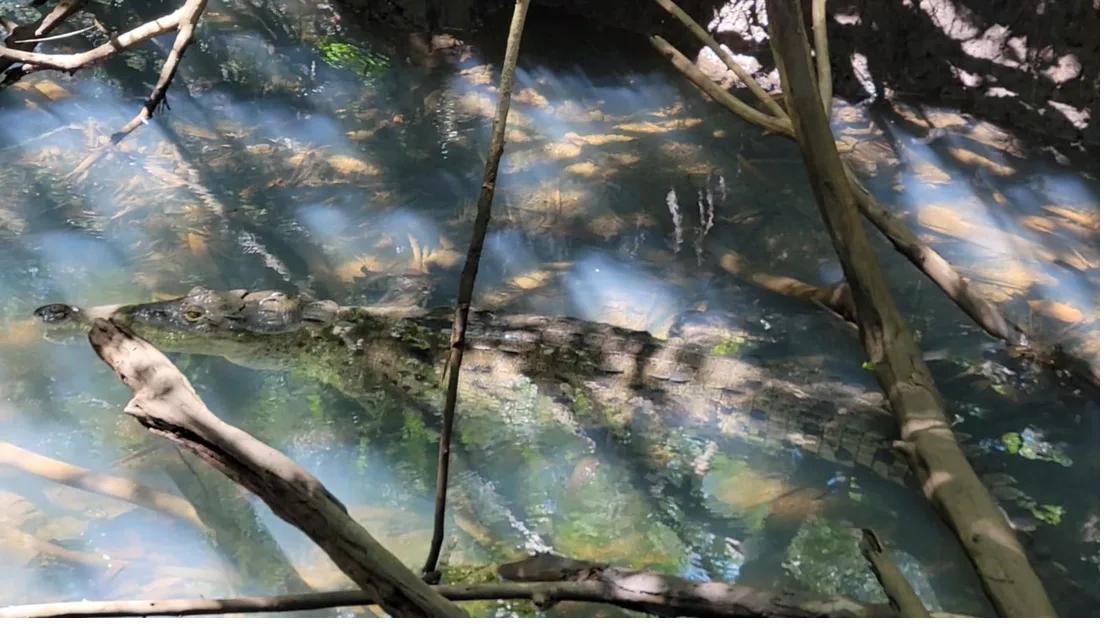
Coiba's wildlife isn't limited to birds. The island is home to endemic mammals like the Coiba Island howler monkey and the Coiba agouti, and the shoreline is patrolled by the American crocodile. You may also notice iguanas basking on branches and, in the water below, the sea turtles and reef fish that make the snorkeling so famous.
When is the best time for birdwatching?
Birds are active year-round on Coiba, but the dry season (December to April) generally offers the most comfortable conditions: calmer boat rides, easier trails and clearer skies. Early morning is prime time — birds are most vocal and active just after sunrise, so the earlier your boat departs from Santa Catalina, the better your chances.
The good news is you don't have to choose between birds and reef. On a standard Coiba day tour you'll see plenty of birdlife from the boat and along the visitor-center trails, then spend the heart of the day snorkeling.
Birding tips for your Coiba day
Bring binoculars if you have them, wear neutral colors, and ask your guide — our local guides know where the macaws tend to feed and which trees the toucans favor. A zoom camera helps, but even a phone captures the scenery beautifully.
How to visit
Every Coiba tour departs by boat from Santa Catalina, Veraguas, about a 1 to 1.5-hour ride to the island. Our guided tours combine the boat journey, a stop at the Coiba visitor center and its trails (great for spotting birds and monkeys), and snorkeling at the best reefs. If birds are your priority, just let us know when you book and your guide will keep an eye out and build in time at the best vantage points.
Coiba's birds survived because the island stayed wild. Visiting responsibly — observing from a distance, never feeding wildlife, and following park rules — is how we keep it that way for the next generation of travelers and the next generation of macaws.
Ready to meet Coiba's wildlife?
Join a guided day tour from Santa Catalina — reef below, macaws above.
Book your Coiba tour