 Snorkel Coiba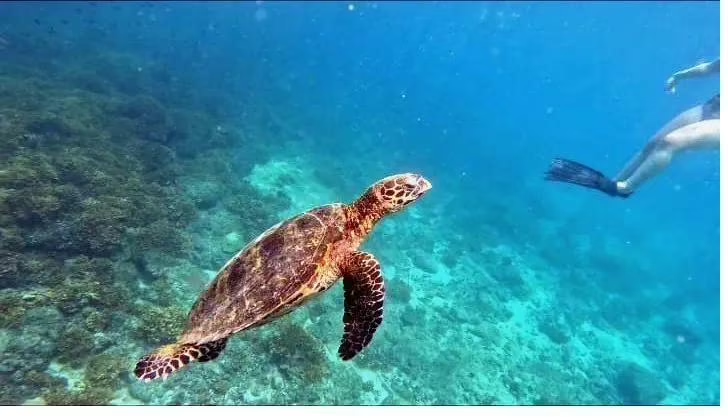
They don't call it the "Baby Galápagos" for nothing. Protected for nearly a century by its history as a prison island, Coiba's waters today rival the most famous dive destinations on Earth — and the best part is you only need a mask and snorkel to see it.
Coiba National Park protects 38 islands and the marine waters between them. That web of reefs, drop-offs and channels is home to an astonishing variety of life. Below are the headline acts you might meet on a snorkeling tour.
The big encounters
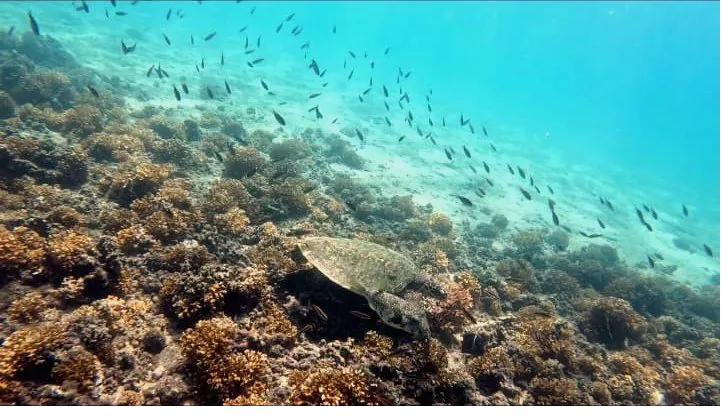
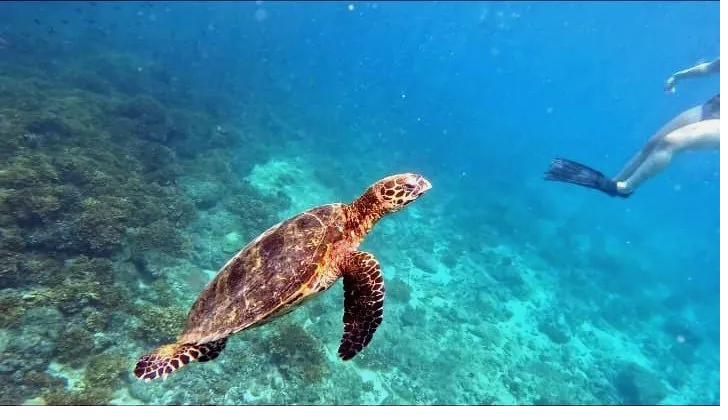
Hawksbill sea turtles
Gliding gracefully over the coral, turtles are one of Coiba's most beloved residents — and one of the most reliable sightings year-round.
Best: nesting Jul–Jan
Whale sharks
The largest fish in the sea — gentle, spotted giants that filter-feed near the surface. Seeing one is the highlight of a lifetime.
Best: Jan–Mar
Manta & eagle rays
Watching a manta ray "fly" beneath you, wings spanning several metres, is pure magic. Eagle rays cruise the reefs too.
Best: Mar–NovHumpback whales & dolphins
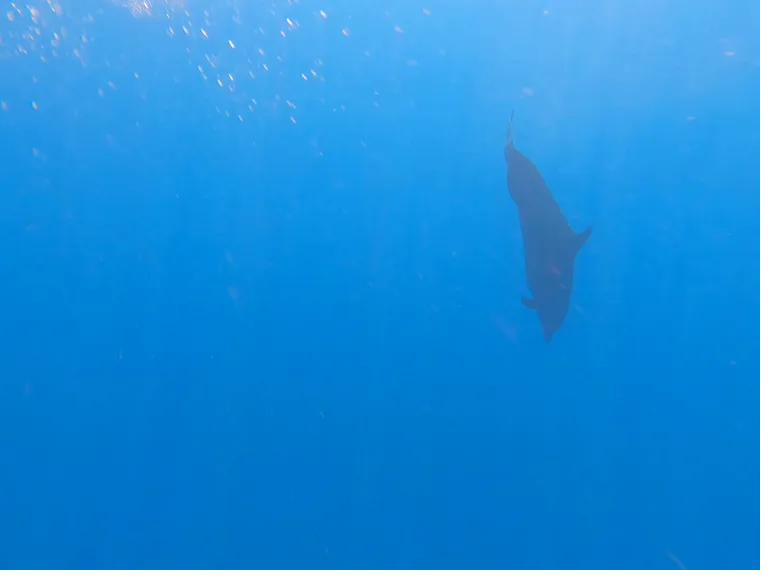
In the green season, humpbacks migrate through these waters. Playful pods of dolphins ride the boat's bow all year.
Best: Jul–OctWhite-tip reef sharks
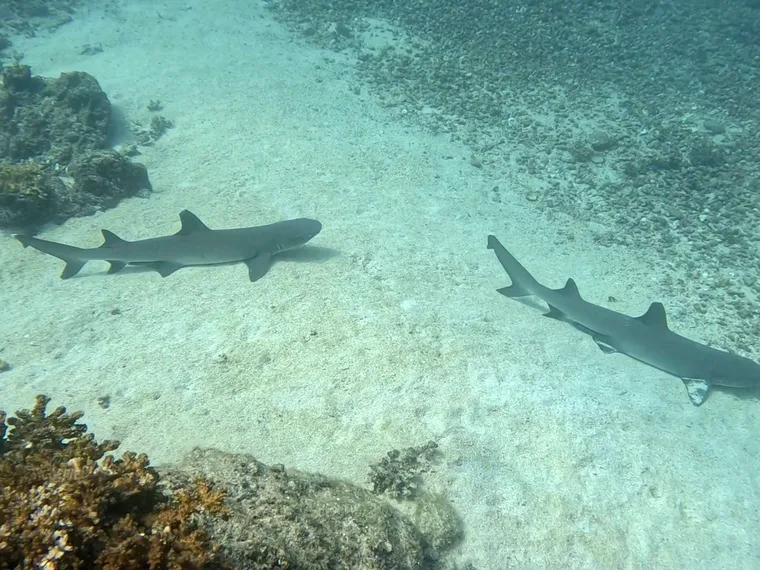
Harmless and shy, these small reef sharks rest on the sandy bottom by day. A thrilling, completely safe sighting.
Year-roundReef fish, everywhere
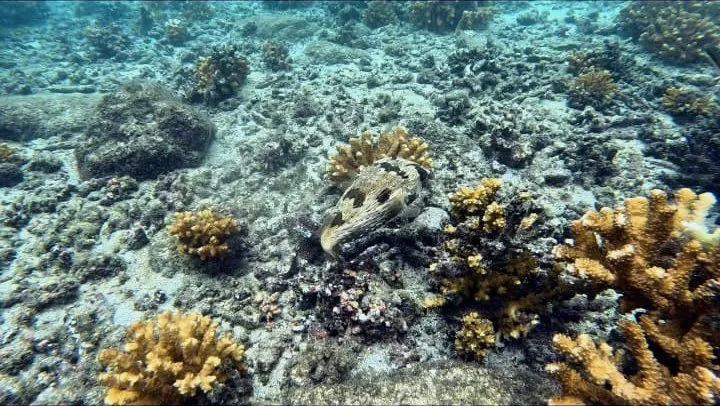
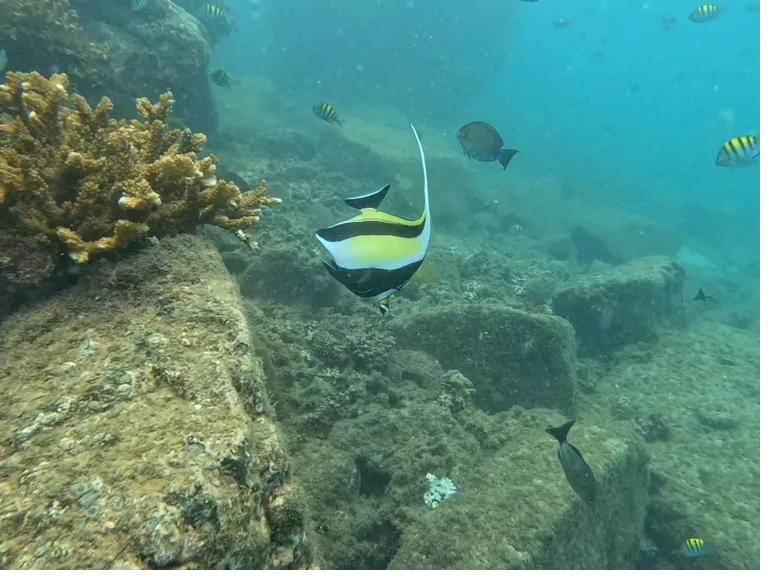
Parrotfish, angelfish, pufferfish, moray eels and shimmering schools by the thousand — 760 species of colour and movement.
Year-roundCoiba and the Galápagos are connected by a "pipeline" deep in the Earth's mantle. The wildlife above the surface tells the same story below it.
The reef that holds it all together
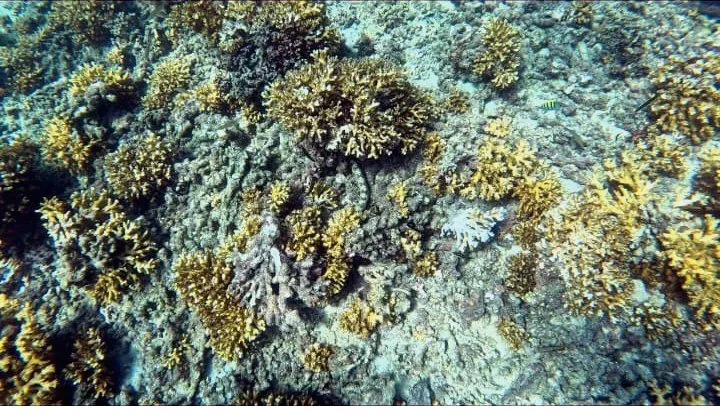
Everything you'll see depends on one thing: the reef. The coral reef surrounding Coiba is the second largest on the entire Pacific coast of the Americas. Because the island was off-limits for so long, these corals escaped the damage that has scarred reefs elsewhere — leaving gardens of hard and soft coral that shelter the whole food chain, from the tiniest cleaner shrimp to passing whale sharks.
Snorkeling here isn't just sightseeing. It's a window into what the ocean looks like when it's left alone to thrive.
Snorkel responsibly
Coiba is a protected UNESCO site. Never touch or stand on coral, keep a respectful distance from animals, and use reef-safe sunscreen. Healthy reefs are why the wildlife is here — let's keep it that way.
Will I actually see these animals?
Honestly? Often, yes — but never guaranteed. This is wild, open ocean, and that unpredictability is part of the thrill. Turtles, reef fish and dolphins are common on most trips. The big seasonal stars — whale sharks, mantas, humpbacks — depend on timing and a little luck. Our guides know where to look, and booking more than one day on the water dramatically improves your odds.
Real sightings from our tours
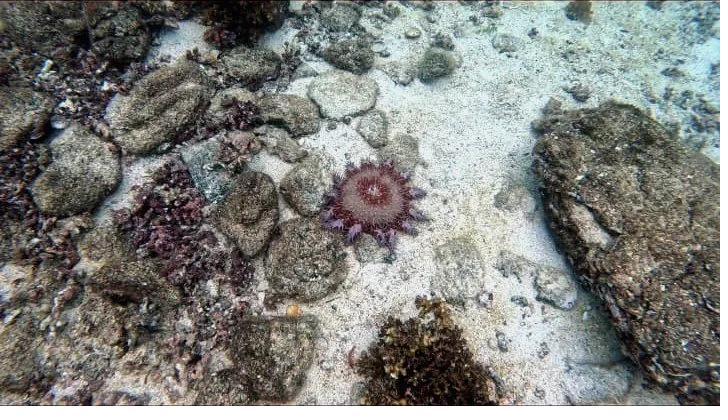
Every shot below was taken by guests and guides on a real Snorkel Coiba trip — no stock photos. This is what an ordinary day underwater looks like out here.
Come meet them in person
Our certified local guides know exactly where the turtles feed and the rays glide. Let's get you in the water.
Book a snorkeling tour Ask about sightings