 Snorkel Coiba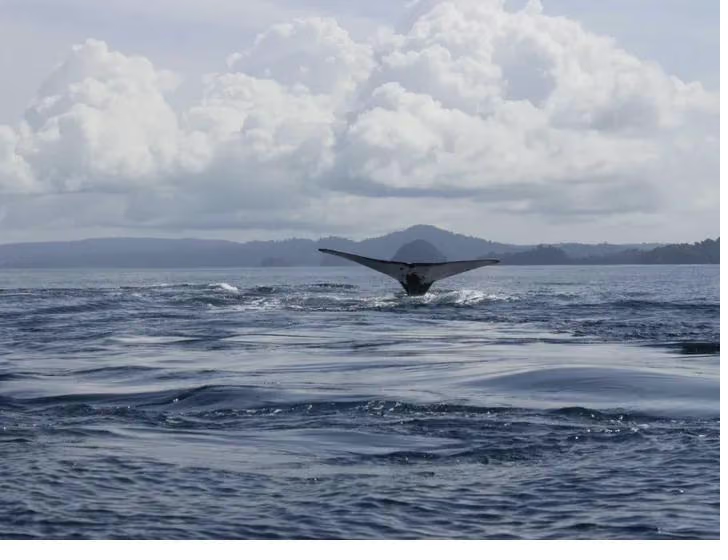
Every year, thousands of humpback whales travel from feeding grounds near the poles to the warm, sheltered waters of Panama's Pacific coast to breed and raise their calves. The waters in and around Coiba National Park sit directly on this migration highway — making Panama one of the most reliable and least crowded places on Earth to watch whales. Here's everything you need to plan it.
Why Panama is a world-class whale watching destination
Panama's Pacific coast is one of the rare places visited by humpback whales from both hemispheres: the large Southern Hemisphere population arrives roughly July through October, and a smaller northern group passes in the opposite season. The Gulf of Chiriquí and the protected waters of Coiba National Park offer warm, calm, food-poor but predator-safe bays — exactly what mother humpbacks look for when calving.
Unlike famous whale destinations where dozens of boats chase a single animal, here it's normal to have a sighting entirely to yourselves, with a UNESCO World Heritage island as the backdrop.
When to see whales in Coiba
The season runs July to October, and the heart of it is July through October, with peak sightings in August and September — that's when mothers with young calves are most commonly seen breaching, tail-slapping and resting near the islands. Early in the season (June–July) sightings build week by week as more whales arrive from the south.
What a whale watching tour looks like
Our whale watching tour leaves Santa Catalina early in the morning, when seas are calmest and whales are most active at the surface. The crossing itself is often where the magic starts — captains scan for blows, splashes and the unmistakable black backs rolling through the swell. When whales are spotted, we slow down, keep a respectful distance and let the animals decide how close the encounter gets.
Because nature keeps her own schedule, we combine whale watching with snorkeling stops at Coiba's reefs — so even on a quiet whale day you'll swim with turtles, rays and tropical fish, and the day is never wasted. Lunch, gear, life vests and a local guide are included.
A 35-ton humpback launching its entire body out of the Pacific is something no photo prepares you for.
The migration, explained
Humpback whales spend the southern summer feeding on krill in the icy waters around Antarctica, building the fat reserves that will power one of the longest migrations of any mammal — up to 8,000 km each way. As the southern winter approaches, they head north along South America's Pacific coast toward the warm tropics. Panama's sheltered gulfs are among their favorite destinations: warm, calm water where calves — born without thick blubber — can nurse, grow and practice breathing, swimming and breaching in relative safety from orcas. The whales barely eat during these months; everything runs on Antarctic fuel. By late October most begin the long swim back south, and the cycle repeats.
Where exactly to watch: Coiba and the Gulf of Chiriquí
The waters of Coiba National Park and the wider Gulf of Chiriquí form one of the most important humpback breeding areas in the entire Eastern Pacific. The islands create calm channels and bays that mothers with calves actively seek out — which is why sightings here so often involve pairs resting near the surface rather than distant blows on the horizon. Departing from Santa Catalina puts you on the doorstep: whales are regularly spotted on the crossing itself, long before reaching the park. No long transfers, no extra flights — just get to Santa Catalina and the whales' nursery is an hour offshore.
Behaviors you might witness
Every whale day is different, and learning to read the behaviors makes it richer. A blow — the bushy exhalation visible for kilometers — is usually your first clue. Breaching, the full-body launch, is the jackpot: scientists still debate whether it's communication, parasite removal or pure exuberance. Tail slapping (lobtailing) and pectoral fin slapping send booming signals across the water. A spy hop — the whale rising vertically to look around — feels uncannily like being watched back. And with calves, you'll often see clumsy, joyful practice versions of all of the above. Our captains narrate what you're seeing, and they're shameless about celebrating a good breach.
Beyond humpbacks: Coiba's other giants
Humpbacks may headline the season, but Coiba's waters host a remarkable supporting cast. Bottlenose and spotted dolphins are seen year-round, often surfing the bow wave in pods of a dozen or more — for many guests, an unplanned dolphin escort becomes the day's favorite memory. From January to March, whale sharks — the largest fish on Earth, gentle plankton-feeders the size of a bus — cruise through the park, giving Coiba a second "giant season" on the opposite side of the calendar. Sea turtles, eagle rays and whitetip reef sharks round out the big-animal bingo card on the snorkeling stops. In other words: there is no wrong month to put a boat under your feet here; the cast simply rotates. For the full species rundown, see our marine life guide, and for month-by-month planning, the best time to visit Coiba.
Photographing whales (without missing the moment)
A few hard-earned tips: shoot in burst mode, keep your shutter fast (1/1000s or quicker if your camera allows), and point where the whale was heading, not where it surfaced — they often blow 2–3 times in a line before diving. When the tail (fluke) lifts high, that signals a deep dive: take the shot, then relax for several minutes. Phones do better than you'd think on calm days; our rental GoPro HERO 11 ($30/day) shines for wide-angle deck shots and the snorkeling stops. But here's our honest advice, learned from hundreds of tours: get your photos on the first encounter or two, then put the camera down. Watching a whale with your own eyes is the memory that lasts.
Responsible whale watching
Coiba is a sanctuary, and we treat it like one. That means approaching slowly and at an angle, never cutting off a whale's path, keeping legal distances — extra space for mothers with calves — limiting time with each animal, and never chasing or encircling. The payoff of patience is real: relaxed whales stay near the surface longer and behave naturally, which makes for far better encounters than aggressive boating ever could.
Tips for your whale watching day
Take seasickness medication 30–60 minutes before departure if you're sensitive — the open-water crossing has gentle ocean swell. Bring a hat, polarized sunglasses (they help you spot whales!), reef-safe sunscreen and a light rain layer in green season. A zoom lens or our rental GoPro HERO 11 ($30/day) is worth it. And keep your eyes on the horizon: the person who spots the first blow earns bragging rights for the rest of the trip.
Whale season is happening right now
The 2026 season runs July–October with peak sightings in August and September. Tell us your dates and we'll share the latest sightings from our captains.
Book your Coiba tourChat on WhatsAppFrequently asked questions
Are whale sightings guaranteed?
No honest operator guarantees wildlife. During peak months sightings are very frequent, and because our tour includes snorkeling stops, you'll have an unforgettable day on the water either way.
Can I swim with the whales?
No — swimming with humpbacks is not permitted in Coiba National Park, for the safety of both whales and people. You'll watch from the boat at a respectful distance.
Is the tour suitable for children?
Yes. Kids regularly have the best eyes on board. Life vests are provided in all sizes — just tell us their ages when you book.
What other animals might we see?
Dolphins are common year-round, sea turtles and reef sharks on the snorkel stops, and seabirds everywhere. January–March is whale shark season — a different but equally amazing reason to visit. See the full list in our marine life guide.
What if the weather turns bad?
Safety comes first. If conditions aren't right we'll talk directly with you to reschedule or find the best alternative — one of the advantages of booking direct.
Few experiences compare to sharing the water with the largest animals on the planet. Check the seasonal calendar, read about getting to Santa Catalina, and book your whale watching tour before the peak weeks fill up.