 Snorkel Coiba
We cross this water most days of the year, and we'd rather tell you the truth than downplay it: the ride to Coiba can move. Not always, not usually badly, but it can. What we've learned from thousands of guests is that almost nobody who prepares properly has a problem, and almost everybody who ignores it and then feels bad wishes they'd read something like this. So here it is.
Why we leave at 8:30, not later
This is the single biggest reason our guests are fine. Mornings on this coast are calmer than afternoons — the wind picks up as the land heats through the day. Leaving at 8:30 means you cross in the flattest water of the day in both directions, because you're also back before the afternoon chop builds. It isn't a scheduling preference; it's the whole reason the day is shaped that way.
Take something, and take it early
If you know you're prone to motion sickness, take your usual remedy 30 to 60 minutes before departure, not when you already feel bad — once nausea starts, a tablet absorbs poorly and works much less. Pharmacies in Santiago and Panama City stock the common options; Santa Catalina's shops are small, so buy it before you arrive. Ginger chews and acupressure wristbands help some people and harm nobody, so if they've worked for you before, bring them.
Where to sit, and what to do with your eyes
Sit toward the middle or back of the boat, where the movement is smallest, and stay where you can feel the wind. The instinct to look down at your phone or into your bag is exactly wrong: keep your eyes on the horizon or the shoreline, which lets what your eyes see match what your inner ear feels. If you start feeling off, tell the crew and look forward at the land. Don't tough it out silently in the bow.
Eat, but eat the right things
Going out on an empty stomach makes nausea more likely, not less. Have a light breakfast — bread, banana, plain coffee or tea — and skip the greasy plate and the heavy dairy. Drink water before and during; mild dehydration makes everything worse, and it's easy to get dehydrated in this heat without noticing. Alcohol the night before is the most common self-inflicted cause we see.
What the sea is actually like, by season
December to April is dry season: calmer crossings and the most predictable conditions of the year. If you're genuinely worried, come then. May to November is green season, when afternoon rain is normal and the sea can be livelier — mornings are still usually fine, which is why we go early. And we don't go at all when conditions are dangerous: that decision belongs to our captains and it's not negotiable. Here's the month-by-month picture.
And if you still feel rough?
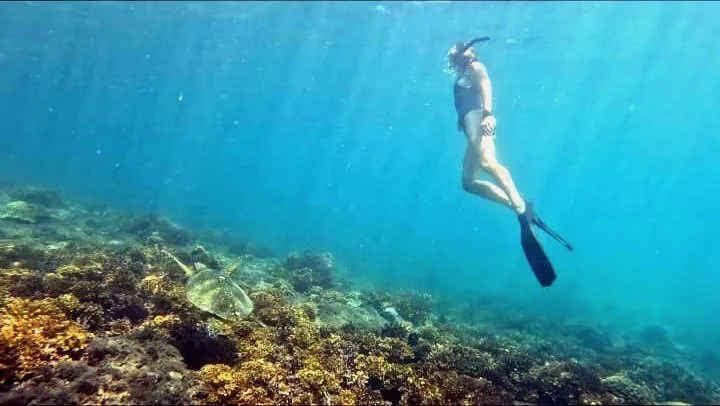
Tell the guide. There's shade, water and a spot to sit where the boat moves least, and the crossing is one hour, not five. Almost everyone who feels queasy on the way out is completely fine once they're floating at the first reef — cool water and something to look at fixes most of it. On the way home people usually sleep. If boats genuinely aren't for you, that's honest and worth knowing: we talk about who this day suits here.
Still want to go? Ask us anything first
Tell us your concerns on WhatsApp and we'll give you an honest read on conditions for your dates — no pressure to book.
Ask on WhatsAppSee the Coiba tour