 Snorkel Coiba
In 2004, a botanist writing a book about the plants of Coiba National Park mentioned, almost in passing, that some monkeys on the islands were using rocks to break open shellfish. Anthropologists noticed. What they found when they finally set up camera traps has since turned a small Panamanian island into one of the most-watched sites in the study of how tool use begins.
What the cameras found
Researchers from the Smithsonian Tropical Research Institute and the Max Planck Institute set motion-triggered cameras on Jicarón Island, inside Coiba National Park. The footage showed white-faced capuchins using hammer-and-anvil stones to smash open sea almond nuts, hermit crabs, snail shells and coconuts — hauling rocks that can approach half their own body weight. It was the first report of habitual stone tool use anywhere in the genus Cebus, despite these monkeys having been studied at field sites for more than 25 years.
Only here, and only some of them
This is what makes it remarkable. Capuchins live on three islands in the park — Coiba, Jicarón and Ranchería — and across the entire Central American mainland. But the stone tool tradition appeared on Jicarón, in only one or two groups. Coiba National Park is, as far as science knows, the only place in the world where capuchins of this genus habitually use stone tools. The obvious question — why here? — still doesn't have a settled answer.
The leading explanation: island life
Island capuchins spend far more time on the ground than mainland ones, face fewer predators, and may have less food to go around. Those three conditions — terrestrial habits, low predation, resource pressure — are exactly what researchers consider fertile ground for tool use to emerge. The same argument gets made about our own ancestors, which is why anthropologists care so much: Jicarón is a chance to watch a stone age begin in real time, instead of digging one up.
Only the males — a detail nobody expected
Across a full year of footage, adult females were never once recorded using a stone tool, even though they were present at the sites and happily scavenged what the males cracked open. Among males it was routine: at the busiest site, capuchins used tools on 83% of the days they appeared on camera. Why the behaviour spread through one sex and not the other is still open, and it's one of the threads researchers are pulling on now.
The strange sequel that made global news
In 2025 the same project reported something stranger. Since 2022, young male capuchins from the tool-using group had been caught on camera carrying infant howler monkeys — not eating them, just carrying them, for days. Researchers described it as a cultural fad spreading among bored adolescents in a safe, predator-free environment. It made headlines worldwide, and it worries conservationists: howler monkeys on Jicarón are endangered, and Jicarón is inside the park.
What this has to do with your day trip
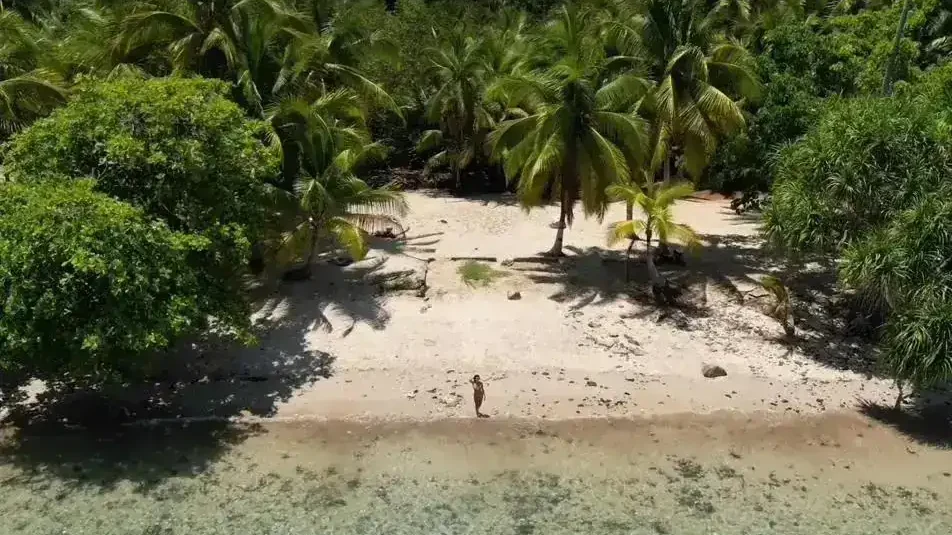
Jicarón is a research island; visitors don't go there, and that's the right call. But Ranchería Island — where we stop for the beach on our day tour — is one of the three islands where these capuchins live, and the visitor centre walk on Coiba passes through the same forest type. You may or may not see a monkey on any given day. What you will see is the ecosystem that produced one of the most interesting discoveries in primate science, still running exactly as it has for 12,000 years since the sea cut these islands off from the mainland.
Spend a day inside the laboratory
Coiba National Park is a working natural laboratory — and a snorkel day trip is the easiest way in. Three reef stops, the visitor centre and Ranchería Island.
Book on WhatsAppSee the Coiba tour