 Snorkel Coiba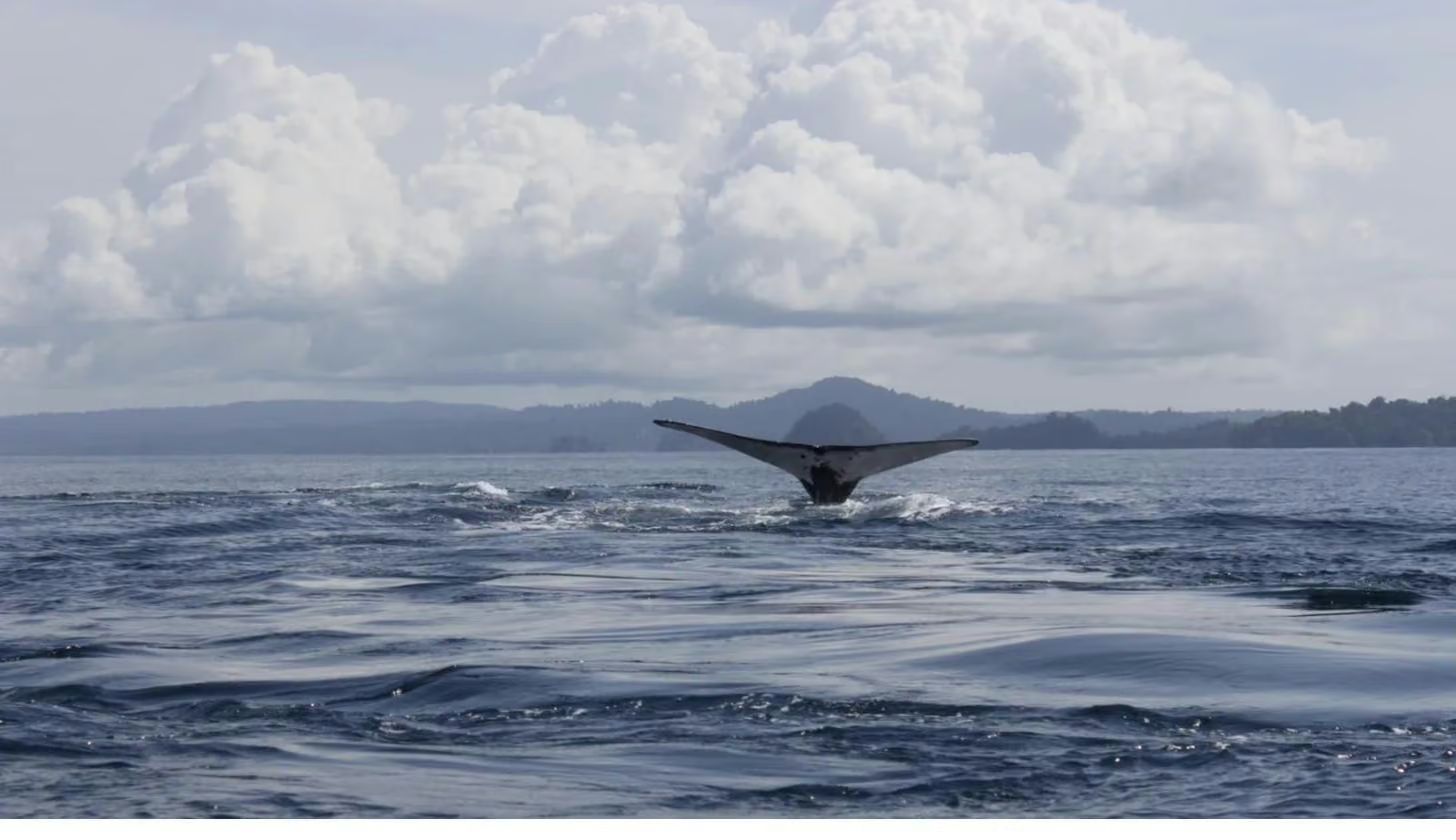
Here's something most people who visit Panama never learn. The humpback whale you watch breaching off Coiba in August began its journey in Antarctic waters. The one someone photographs from the same shoreline in February came from the coast of California. Two separate populations, from opposite ends of the planet, using the same nursery — and never meeting each other. Panama is one of the very few places on Earth where this happens.
Two migrations, one destination
Humpbacks feed in cold, food-rich polar water and migrate to warm, shallow tropical water to give birth — newborn calves have almost no blubber and would struggle in cold seas. Panama's Pacific coast offers exactly that: warm, sheltered, shallow bays. What makes it extraordinary is that two different populations, one from each hemisphere, both chose it. Panama is one of the few countries in the world that hosts humpbacks from both the Northern and Southern Hemispheres.
The southern journey: from Antarctica, July to October
This is the big one. Several hundred whales feed through the southern summer around Antarctica and the coasts of Chile and Peru, then swim north as those waters turn to winter — a trip that can exceed 8,000 kilometres, among the longest migrations of any mammal on Earth. They arrive in Panama between July and October. These are the whales you'll see on our whale watching tours, and the reason our season runs exactly then.
The northern journey: from California, December to April
A second, smaller group does the mirror-image trip. After feeding off California, Oregon and Washington, they head south and reach Panama between December and April — the northern winter. Fewer animals, less predictable sightings, but the same purpose: breeding and calving in warm water. Most visitors have no idea Panama has a second whale season at all.
Why they never meet
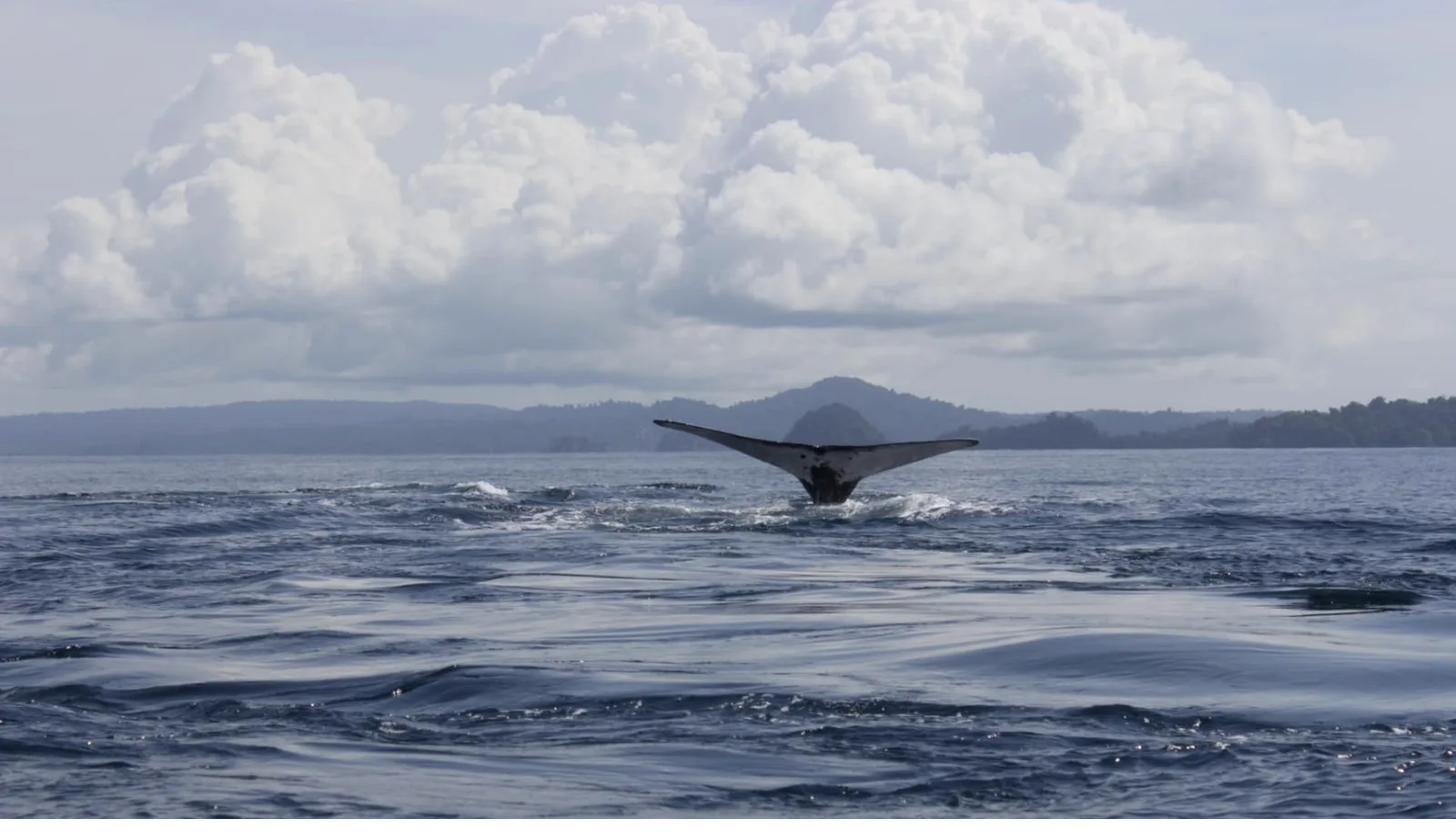
Here's the elegant part. Both populations come to breed in their own winter — and the hemispheres have opposite winters. So the southern whales arrive as the northern ones have long gone, and vice versa. They share the same nursery, six months apart, generation after generation. Scientists describe the two groups as genetically distinct, kept apart not by any physical barrier but purely by timing. The same water; never the same month.
Why Coiba specifically
The Gulf of Chiriquí and Coiba National Park sit right on this corridor, and mothers use the sheltered water between the islands to nurse newborn calves through their first weeks. It's also why the crossing to Coiba doubles as whale territory in season — you're travelling through the nursery, not around it. Coiba's protected status matters here too: less traffic, less noise, calmer water for animals raising young.
How to actually see it
For reliable sightings, come July to October and take a boat — we run two options: whales only, back by 2 pm, or whales plus a full Coiba snorkel day. Bring a wide lens rather than a zoom (they surface closer than you expect), and let the captain hold position; approaching whales is regulated and our guides are certified in responsible cetacean watching. If you're planning dates, this month-by-month guide lines it up with the rest of your trip.
See the end of an 8,000-kilometre journey
July to October, humpbacks that spent the summer in Antarctic waters raise their calves right off Coiba — go out with the local team that knows where they gather.
Book on WhatsAppSee the whale tour