 Snorkel Coiba
This is the most common question we get before anything about tours, usually from people travelling with kids or going solo. The short version: Panama is one of the more straightforward countries to travel in Central America, and the things that actually hurt visitors here are almost never the ones they were worried about. Here's the long version, without either sugar-coating or fear-mongering.
Crime: real, but concentrated and avoidable
Panama City is a large capital and behaves like one. Petty theft and phone snatching happen, mostly in specific neighbourhoods and at night. The practical rules are boring and effective: use registered taxis or rideshare after dark, don't walk with your phone out on empty streets, keep your passport in the hotel and carry a photo of it. Rural Panama — including Santa Catalina — is a different world: a small village where most people know each other.
The sea deserves more respect than the streets
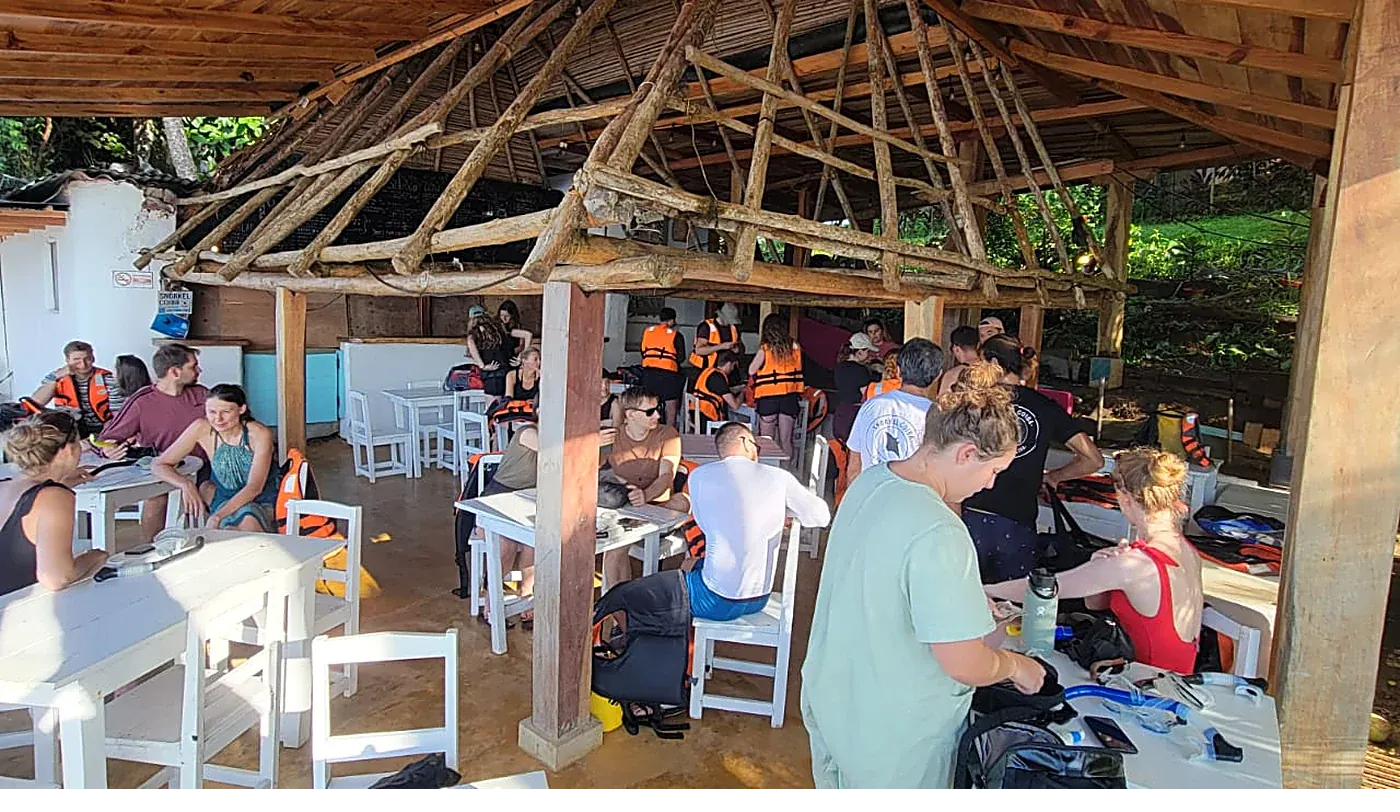
This is the risk visitors underestimate. Panama's Pacific has rip currents, and drownings at unpatrolled beaches are a genuine cause of tourist deaths in this region — far more than crime. Swim where locals swim, ask before going in at an unfamiliar beach, and if you're caught in a current, swim parallel to shore rather than against it. On our tours everyone wears a life vest, guides are in the water, and we don't go out when conditions are dangerous — that's written into our policy.
Water, food and mosquitoes
Tap water is safe to drink in Panama City and most of the country, including Santa Catalina — one of the few places in Latin America where that's true. Street food is generally fine. Mosquitoes carry dengue in some areas, so repellent in the evenings is sensible, especially in the green season. Nothing here requires exotic preparation; the usual travel common sense covers it.
Solo travellers and families
Panama is a common first solo trip in Latin America, and Santa Catalina in particular is a small surf village where solo travellers move around easily. For families: our tours run with children regularly, everyone wears vests, and kids 12 and under enter the park free. The usual advice applies more than any country-specific worry — share your plans with someone, keep a charged phone, and trust your instincts about people and places.
The scams to know
They're mild by regional standards. Taxi drivers quoting inflated prices to obvious tourists (agree the fare first, or use an app), and — more relevant to us — fake tour operators collecting deposits and disappearing. Book with someone you can verify: a real address, real Google reviews, a phone number a human answers. Here's exactly how our booking works, including why we confirm your date before you send any money.
The honest summary
Use city sense in the city, ocean sense at the beach, and normal travel sense everywhere else. Panama has no hurricanes, uses the US dollar, has drinkable tap water and a functioning tourist police. The country's real hazard for visitors is water they underestimate — which is exactly why we go out with vests, certified guides and a captain who is willing to cancel. If anything about your specific trip worries you, message us and ask; we'd rather answer honestly than sell you a day you'll regret.
Questions before you commit?
Ask us anything about safety, conditions or logistics on WhatsApp — real people, no bots, and no pressure to book.
Ask on WhatsAppSee the Coiba tour